
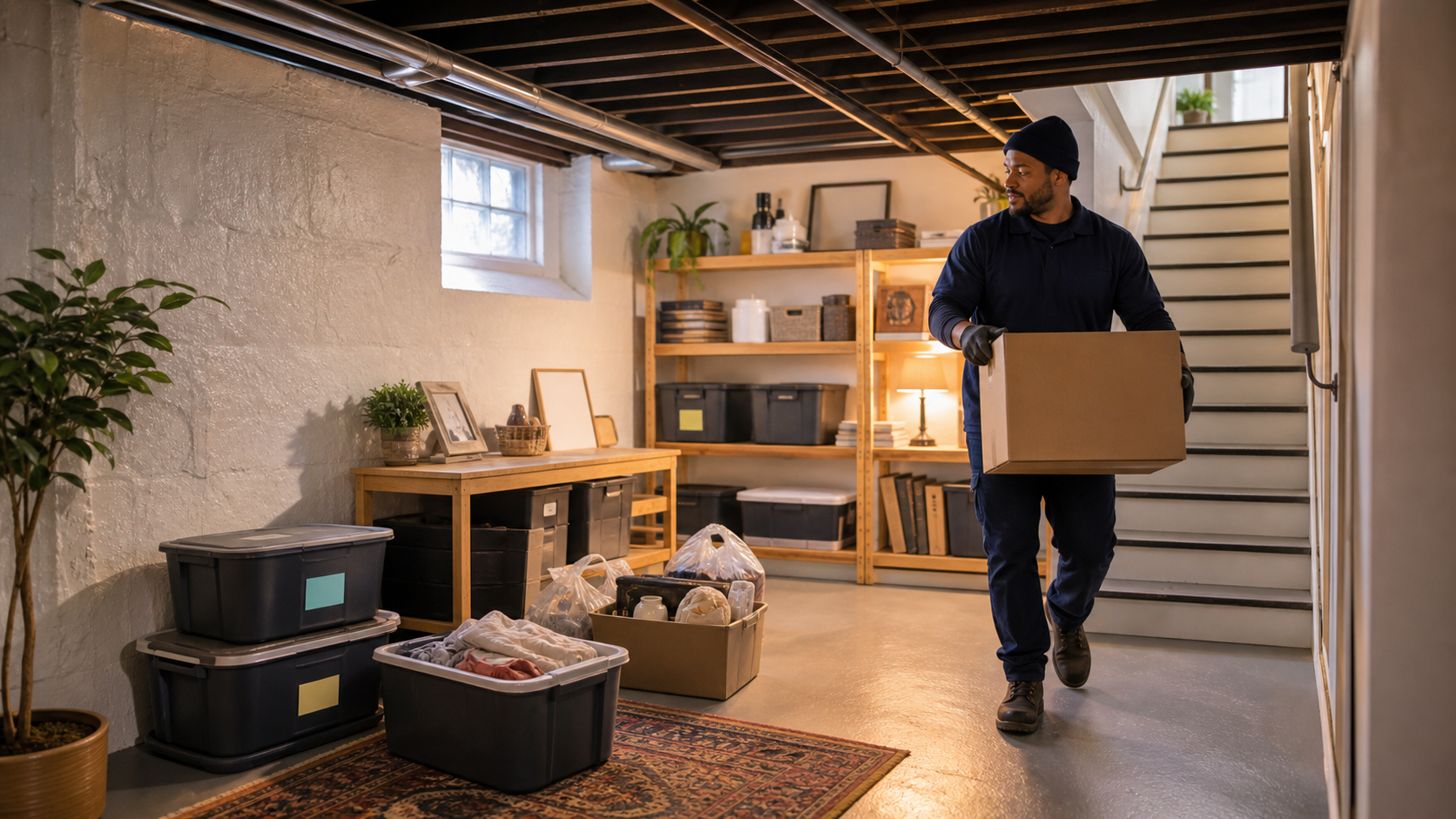
Basement Cleanout Checklist: What to Sort, Donate, and Toss Before the Crew Arrives
A basement cleanout is easier and usually less expensive when you decide what stays, what can be donated, and what needs a special disposal route before the crew arrives. Philadelphia rowhome basements add practical challenges: low ceilings, damp masonry, narrow stairways, bulkhead access, and items that may have been stored undisturbed for decades.
Use this checklist to make the job safer and get a clearer estimate.
1. Make a keep-first pass
Start by pulling out anything you already know you are keeping: tools, seasonal decorations, labeled storage bins, working appliances, documents, and items with family value. Move those items to one clearly marked area so a crew can work around them.
Do not make final decisions in a dark or dusty basement. Bring a bright work light, wear gloves and closed-toe shoes, and watch for standing water, exposed wiring, unstable shelving, and signs of pests. If the space has active water intrusion, solve that safety issue before stacking or moving heavy boxes.
2. Create four sorting zones
Use simple labels:
- Keep: items that will return to organized storage
- Donate or sell: clean, usable items someone else can use
- Recycle or dispose: broken, worn-out, or non-donatable material
- Ask first: paint, chemicals, propane cylinders, electronics, tires, appliances, and anything you are unsure about
Photograph valuable items before moving them. For large furniture, measure the stairway and bulkhead opening before assuming it can be removed through the same route it entered.
3. Separate hazardous and questionable materials
Do not put paint, solvents, pesticides, pool chemicals, propane, or other household hazardous waste into a regular trash pile. Philadelphia explains accepted materials and collection options on its household hazardous waste page. Keep containers closed, upright, and away from heat while you decide what to do.
Older basements can also contain damaged insulation, pipe wrap, floor tile, or other materials that raise asbestos concerns. The EPA's asbestos remodeling guidance notes that you cannot identify asbestos reliably by looking. If a material may be disturbed, stop and get qualified advice before pulling it apart.
4. Ask how the company prices the cleanout
Most junk removal estimates are based on volume, weight, labor, or a combination. Send photos and explain the access conditions before requesting a quote. A good estimate accounts for:
- Number of stairs and distance to the truck
- Heavy items such as safes, cast iron radiators, or appliances
- Disassembly or cutting that may be needed
- Items the company will not accept
- Extra charges for same-day service or special disposal
Ask whether the quote is guaranteed, what happens if the crew finds more volume than described, and whether donation or recycling is included only when the company can document that route.
5. Prepare the path
Clear a continuous path from the basement to the loading area. Protect fragile door trim and newly painted walls, and move vehicles so the truck has room to stage. Tell the crew about low beams, loose steps, sump pumps, utility shutoffs, and any area that must remain untouched.
For a renovation, coordinate the cleanout with the contractor who will work next. Removing everything too early can expose stored utilities or leave the basement unsecured; removing it too late can slow the project.
Compare Philadelphia cleanout providers
Browse the Philadelphia junk removal directory and compare providers such as Unfunk Your Stuff, Philadelphia Hauling, Cleanouts, Furniture Removal, Junk King Greater Philadelphia, and We Love Junk.
If the basement is part of a larger decluttering project, continue with How to Choose a Junk Removal Company in Philadelphia and the Philadelphia rowhome maintenance calendar.