
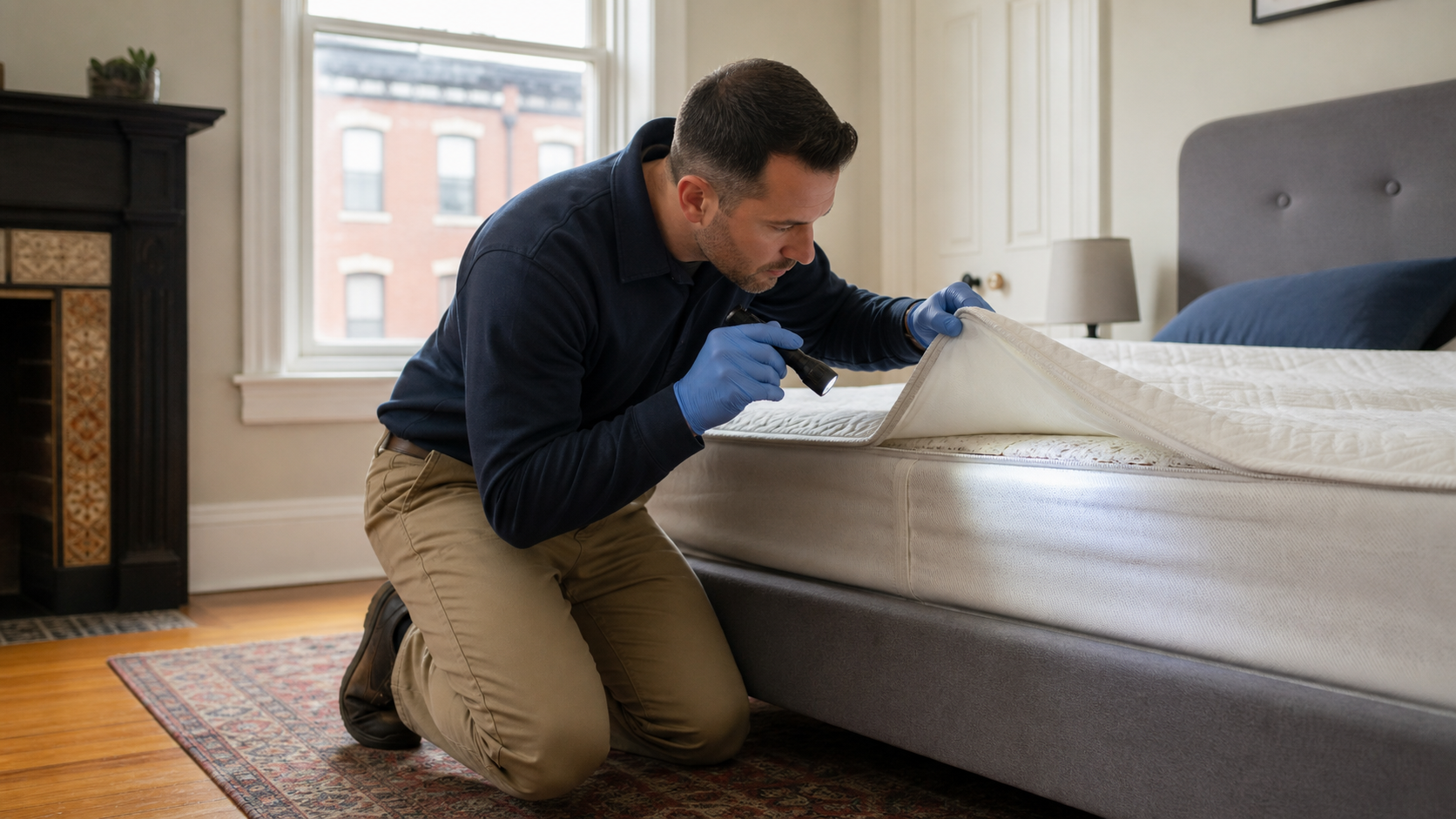
Finding a possible bed bug in a Philadelphia home can turn into an expensive, stressful problem quickly. The best first move is not to spray everything or carry furniture out of the room. It is to document what you found, limit how much you move between rooms, and arrange a careful inspection.
This guide explains what to do before hiring a bed bug exterminator, how to compare treatment plans, and which questions help separate a thorough pest control company from a vague quote.
First, confirm that the pest is actually a bed bug
Bed bugs can be confused with carpet beetles, fleas, ticks, and other small insects. Bites alone are not reliable proof because skin reactions vary and can have other causes.
Before paying for treatment:
- Take a clear photo if you can do so without crushing the insect.
- Place a captured specimen in a sealed container or zip-top bag.
- Note the room and exact location where it was found.
- Look for evidence around mattress seams, box springs, bed frames, headboards, and nearby upholstered furniture.
- Ask whether the company will identify the specimen or confirm activity before recommending treatment.
A reputable company should be willing to explain what evidence it found and where it found it. Be cautious if a contractor recommends an expensive whole-home treatment without inspecting the affected rooms.
Philadelphia renters should notify the landlord in writing
Philadelphia has specific bed bug protections for tenants. The City says a tenant should notify the landlord in writing within five business days of finding or reasonably suspecting bed bugs. The landlord must then hire a pest management professional within ten business days of receiving notice. The rules also address investigation, remediation, and follow-up monitoring.
Keep a dated copy of your email, letter, maintenance request, photos, and any response. Do not rely only on a phone call. Owners and renters can review the City's current instructions on the Philadelphia bed bug law page.
Verify the company's Pennsylvania credentials
Bed bug treatment may involve restricted professional work and pesticide application. Ask for the business name that appears on its Pennsylvania pesticide license and the name of the certified applicator responsible for the work.
Pennsylvania requires pesticide application businesses to be licensed, maintain financial responsibility, and employ at least one certified applicator. You can review the requirements through the Pennsylvania Department of Agriculture and search its pesticide applicator database.
Also ask for proof of liability insurance and a written estimate before authorizing work.
Ask what the inspection includes
A useful inspection is more than a quick look at the top of a mattress. Ask whether the technician will examine:
- Mattress and box-spring seams
- Bed frames, headboards, and nearby furniture
- Baseboards, wall-floor junctions, and cracks near sleeping areas
- Upholstered chairs and couches where people regularly rest
- Adjacent rooms when evidence or building conditions justify it
- Nearby units in a multi-unit property, when appropriate and authorized by the property owner
Philadelphia rowhomes, duplexes, and apartment buildings can have shared walls and closely connected living spaces. That does not mean every neighboring unit is infested, but it does make the inspection scope worth discussing.
Look for an integrated treatment plan
The U.S. Environmental Protection Agency recommends an integrated pest management approach rather than relying on a single tactic. In practice, a professional plan may combine monitoring, vacuuming, steam or heat, mattress encasements, clutter reduction, targeted pesticide use, and follow-up inspections. The right combination depends on the property and the extent of activity.
Ask the contractor to put the proposed methods in writing. The plan should identify which rooms or items will be treated, what products or equipment may be used, what residents must do beforehand, and when the technician will return. The EPA's bed bug IPM guidance is a useful reference when comparing proposals.
Avoid anyone who promises that one spray is always enough. Bed bug eggs, hiding places, preparation quality, and the extent of the infestation can all affect the work required.
Compare heat and conventional treatment carefully
Some companies offer structural heat treatment, while others use targeted chemical and nonchemical methods over multiple visits. Neither label tells you whether the plan is good.
For heat treatment, ask:
- Which rooms will be heated?
- How will temperatures be measured and documented?
- Which items must be removed for safety?
- Will monitoring or follow-up service be included?
For a conventional treatment plan, ask:
- How many visits are included?
- Which products and nonchemical methods will be used?
- How long must people and pets remain out of treated areas?
- How will the company check whether activity continues?
Compare written scope, follow-up, and retreatment terms—not just the initial price.
Get preparation instructions before moving anything
Preparation requirements differ by treatment method. Ask for a room-by-room checklist in writing before bagging clothing, discarding furniture, or moving belongings.
Moving an untreated item into another room, hallway, vehicle, or relative's home can spread the problem. Throwing out a mattress without a plan can also create unnecessary cost. Follow the hired professional's instructions for laundering, drying, bagging, labeling, and handling furniture.
Do not use outdoor pesticides indoors, combine products, or rely on total-release foggers as a substitute for a professional plan. If you have already applied a product, tell the technician exactly what it was and where it was used.
Questions to ask before booking
Use this checklist when calling Philadelphia pest control companies:
- Will you confirm active bed bugs before recommending treatment?
- Is the business licensed for pesticide application in Pennsylvania?
- Who is the certified applicator responsible for the job?
- What rooms, furniture, and nearby areas will you inspect?
- Which treatment methods are included in the quoted price?
- How many visits and follow-up inspections are included?
- What preparation is required, and will you provide it in writing?
- What are the re-entry instructions for adults, children, and pets?
- What does the warranty or retreatment policy cover?
- What situations would result in additional charges?
Find bed bug treatment companies in Philadelphia
PHL Home Pros maintains a directory of Philadelphia pest control services that you can use to build a shortlist. Review the company information, verify current credentials independently, and request written proposals from more than one provider when time allows.
For broader seasonal upkeep, see the Philadelphia rowhome maintenance calendar. Catching moisture, clutter, exterior gaps, and other property issues early will not guarantee that bed bugs stay away, but a consistent maintenance routine makes many household problems easier to spot and address.
The goal is not simply to hire the first company that promises fast results. It is to choose a qualified provider with a documented inspection, a treatment plan matched to the property, clear preparation steps, and meaningful follow-up.