
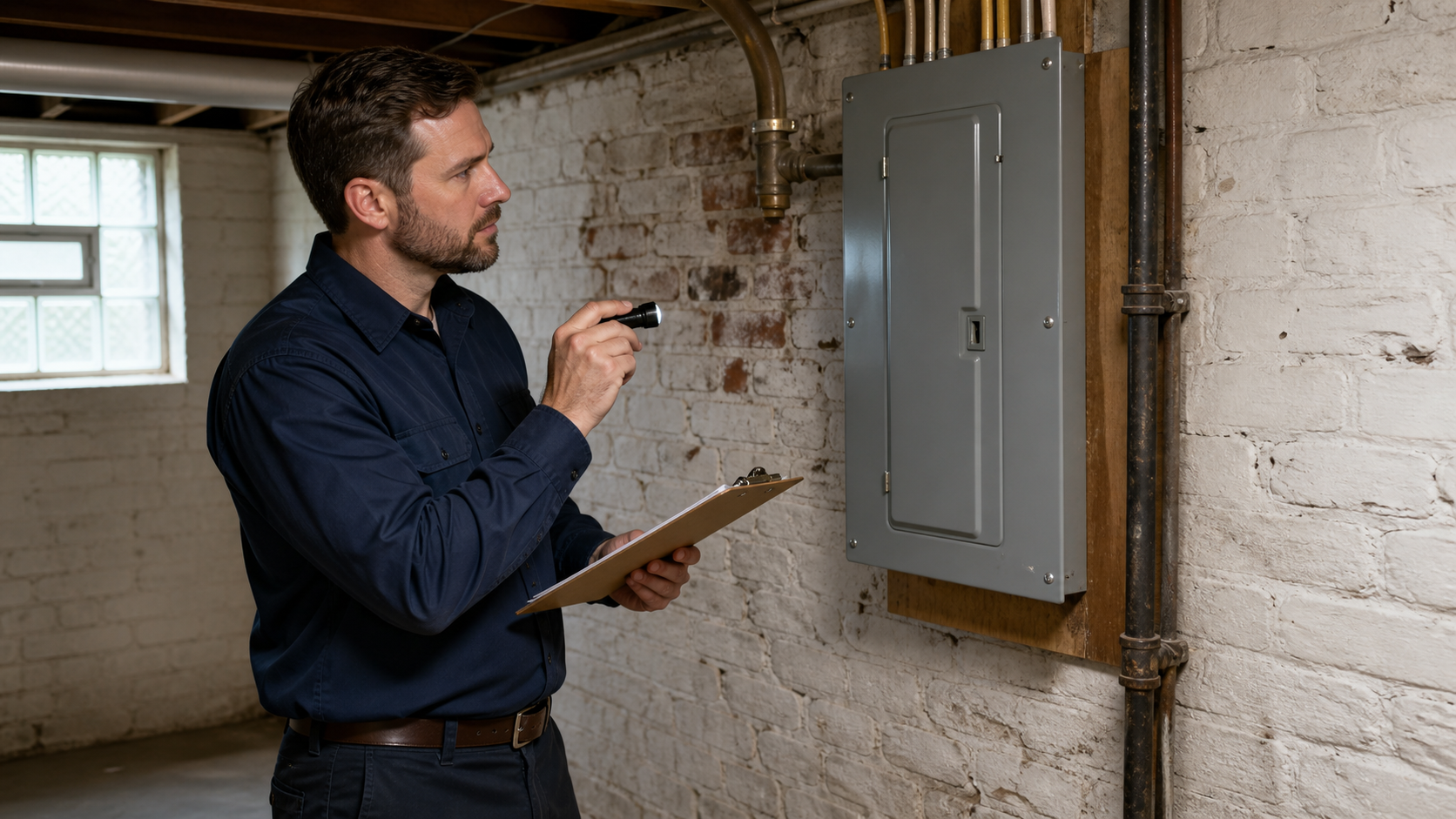
Electrical panel problems are not a good do-it-yourself troubleshooting project. Heat, burning odors, buzzing, repeated trips, water intrusion, corrosion, or unexplained flickering can indicate a condition that needs prompt professional evaluation.
If you smell burning, see smoke, hear persistent buzzing, or notice heat or damage around the panel, keep clear and contact a qualified electrician or emergency service as appropriate. Do not remove the panel cover or work inside the panel yourself.
Warning signs homeowners should not ignore
A breaker that trips once after an unusual overload is different from a breaker that trips repeatedly under normal use. Other warning signs include scorch marks, melted insulation, loose-looking components, rust, water stains, crackling, or lights that dim when large equipment starts.
Do not assume a new breaker will solve the problem. Repeated trips can be a symptom of an overloaded circuit, damaged wiring, a failing appliance, moisture, or a panel component that needs inspection.
Philadelphia rowhome context
Older rowhomes may have additions, finished basements, converted spaces, mixed-era wiring, limited panel capacity, or circuits that have been modified over time. A panel review should consider the whole electrical system and the home’s current use.
Tell the electrician about renovations, electric heat, air-conditioning equipment, EV charging, laundry appliances, kitchen upgrades, and any recent flickering or tripping. Provide photos from outside the panel and a list of affected rooms.
What an electrical evaluation should cover
Ask the electrician to explain the observed condition, immediate safety concerns, recommended repair, and any optional upgrade. If the work changes service capacity, adds circuits, moves devices, or affects finished walls, ask what the scope includes and whether permits or inspections may apply.
Request an itemized estimate that separates diagnostic work, materials, labor, patching, testing, and follow-up. A panel upgrade is not the same project as replacing one failed breaker.
How to prepare for the appointment
Keep the panel area clear and identify outlets, fixtures, appliances, or rooms connected to the problem. Do not cover the panel or move energized equipment to make it easier to access.
If you are buying or renovating a Philadelphia rowhome, ask for written documentation of observed deficiencies and recommended next steps. That information can help coordinate electrical work with plumbing, HVAC, remodeling, or appliance installation.
Treat the panel as a safety issue
A warm or discolored panel, burning odor, buzzing, crackling, visible arcing, repeated tripping, or unexplained flickering deserves prompt professional attention. If there is smoke, active sparking, or a strong burning smell, move away from the area and contact emergency services as appropriate. Do not remove the panel cover or repeatedly reset a breaker to keep a failing circuit running.
Make a note of which appliances or rooms are affected and whether the issue began after a renovation, storm, new appliance, or electrical work. This history helps the electrician narrow the diagnosis without asking you to perform unsafe tests.
What a professional should explain
Ask the electrician to identify whether the problem is a single circuit, the service equipment, overloaded wiring, damaged connections, grounding or bonding, moisture, or a failing appliance. A panel replacement is not automatically the answer; the underlying load, conductor condition, service capacity, and code requirements should be evaluated together.
Request a written scope that separates troubleshooting, repair, permitting if required, replacement parts, and any recommended follow-up. If other work is planned, coordinate the electrician before walls are closed or high-load equipment is installed.
A Philadelphia comparison checklist
Panel access can be limited by basements, storage, finished walls, or shared utility areas. Tell the provider about stairs, parking, building access, and any other trade working on the property at the same time.
Before you request or approve work, keep these details together:
- What evidence points to the panel as the cause?
- Is the system safe to use until inspection?
- Does the quote separate repair from upgrade options?
- Will testing be documented?
- Could the project affect finished walls or other trades?
- What permits or inspections should be confirmed?
Local providers and related guides
Use the Philadelphia electrician directory to compare local providers, including Linc Electric Inc, EP Electric LLC, BG Electric Service LLC, Protech Electrical Services. Directory inclusion is not an endorsement; confirm current services, availability, licensing, insurance, and the written scope directly.
For related planning help, see How to Choose an Electrician in Philadelphia and Philadelphia Rowhome Remodeling Estimates.
Bottom line
Electrical warning signs deserve a safety-first response. Give the electrician clear observations and let the professional determine whether the solution is a repair, circuit change, or larger upgrade.