
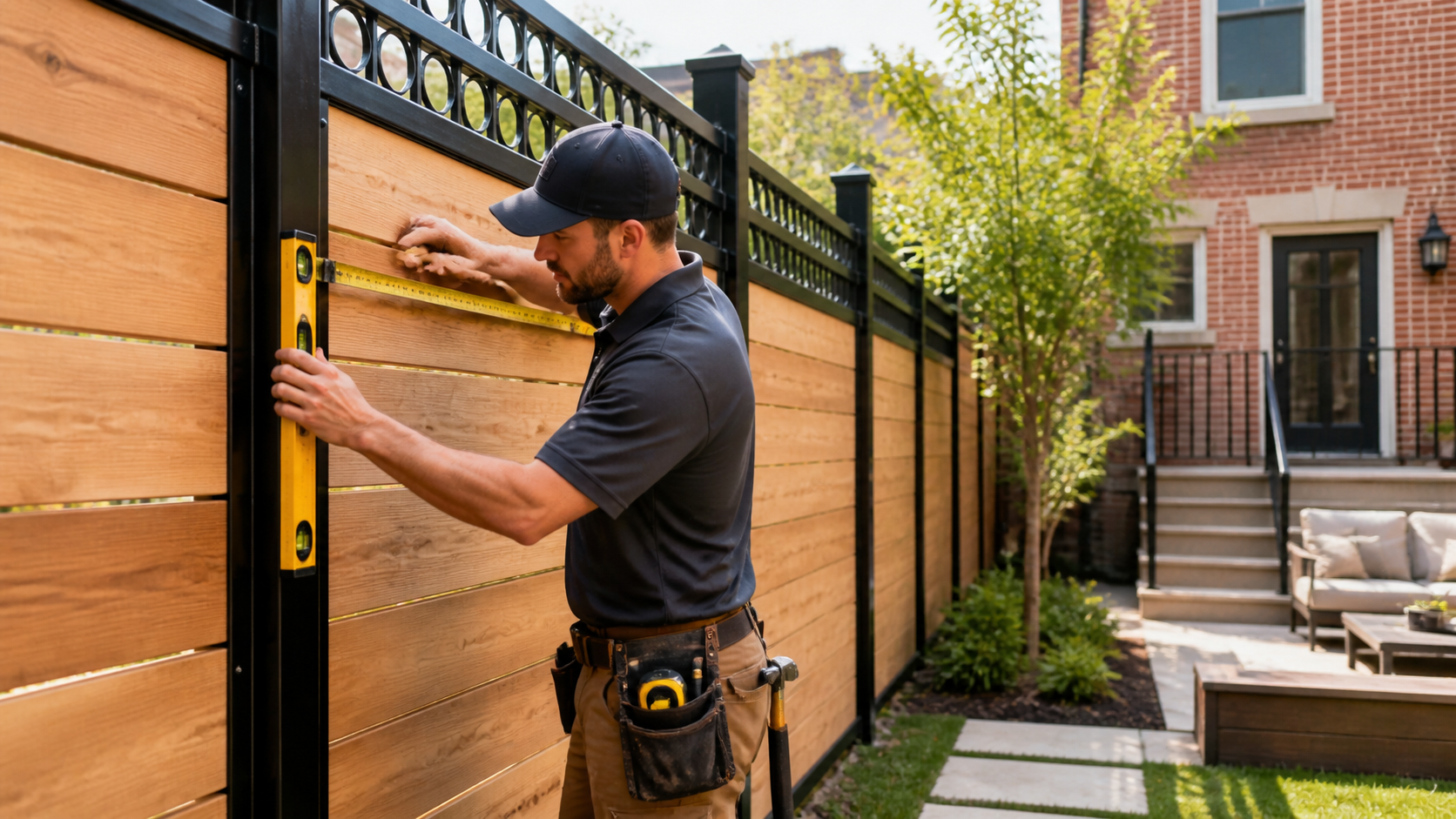
A fence project in Philadelphia is a property-line, permit, material, and access decision—not just a materials list. Rowhome lots can be narrow, neighbors may share boundaries, and a fence may sit beside a sidewalk, alley, utility line, or historic property. Use this checklist before choosing a fence contractor.
Define the boundary and purpose
Decide whether the fence is for privacy, pets, child safety, screening equipment, security, or simply a finished edge. Walk the proposed line and identify gates, steps, retaining walls, trees, utilities, and any place where the fence would meet a neighbor's structure.
Do not assume the visible line is the legal property line. Check your deed or survey and discuss the plan with an adjoining owner when the work is close to a shared boundary. Put the agreed layout and gate swing in writing.
Check Philadelphia permit requirements
Philadelphia's fence permit guidance explains when a fence may need a zoning or building permit, including common height, street-front, masonry, historic-district, and floodplain situations. Ask the contractor to review your exact site and identify who will apply for permits and arrange inspections.
A contractor should not tell you that every fence is exempt without looking at the location and design. If the fence touches a sidewalk, street-facing yard, historic property, or substantial masonry work, ask for the city-specific answer before materials are ordered.
Compare materials for the site
Wood, vinyl, aluminum, steel, and chain link each have different maintenance, privacy, lifespan, and repair tradeoffs. Ask how the selected material handles shade, wet soil, wind, pets, gate hardware, and the limited access common on Philadelphia lots.
For wood, ask about post depth, drainage, stain or paint, and replacement of damaged boards. For metal or vinyl, ask how panels and posts will be repaired if a vehicle, storm, or neighbor's work damages one section. Confirm whether the gate, latch, hinges, and self-closing hardware are included.
Ask about registration, insurance, and the written scope
For projects that fall under Pennsylvania's home-improvement rules, review the Attorney General's Home Improvement Contractor registration information and ask for current proof of registration, insurance, and workers' compensation coverage. Registration is not an endorsement, so check references and the contractor's completed work.
A written estimate should include demolition, disposal, layout, posts, footings, panels, gates, hardware, permits, utility locating, grading, cleanup, taxes, payment schedule, and warranty. It should also say what happens if the crew finds concrete, buried debris, roots, or a boundary conflict.
Plan access and cleanup
Tell the contractor how materials will reach the yard. A rear alley, shared passage, basement route, or narrow side yard can add labor. Ask whether the crew protects paving, removes concrete, restores disturbed soil, and sweeps the work area. If a neighbor needs access, agree on the schedule before demolition starts.
Compare Philadelphia fence contractors
Browse the Philadelphia fence contractor directory and compare providers such as Northeast Fence & Iron Works, Mayfair Fence Company, Pinecrest Fence Company, and Greenhill Fencing.
If the project is part of a broader exterior update, pair this checklist with the Philadelphia rowhome maintenance calendar and verify any other city approvals before work begins.