
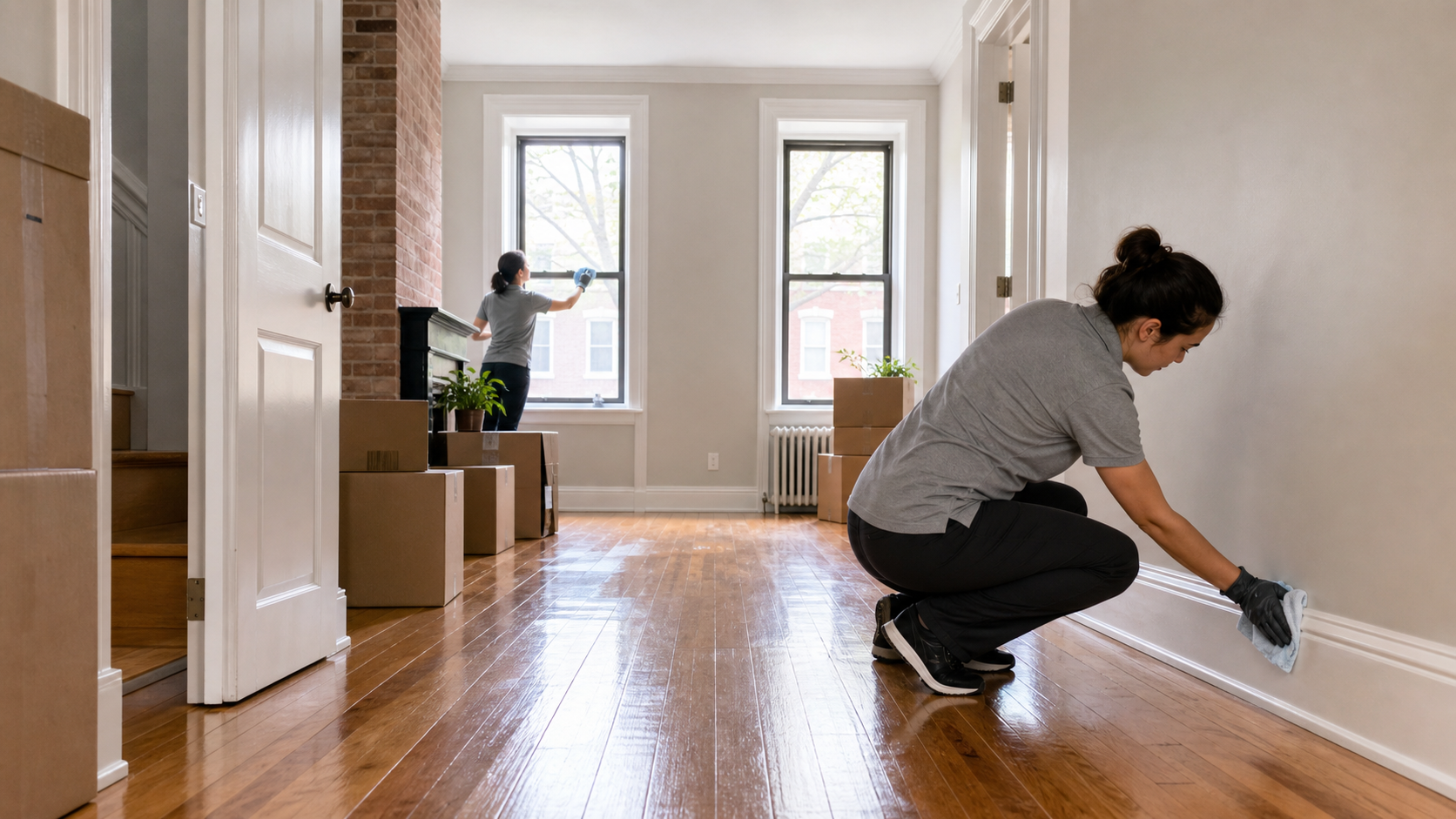
Move-out cleaning in Philadelphia is easier when you treat it as a handoff, not a regular weekly clean. The goal is to leave the home empty, accessible, and easy for the next person to inspect. In a rowhome, that usually means working through several floors, stair rails, baseboards, window wells, closets, and tight areas that are easy to skip when the furniture is still in place.
This room-by-room checklist can help you decide what to handle before a cleaning crew arrives and what to ask for when you book a move-out service.
First, finish the removal work
Cleaning goes faster after furniture, boxes, trash, and unwanted items are out. Before the cleaners arrive:
- Remove everything you are taking with you.
- Separate donations, recycling, household trash, and items that need special disposal.
- Empty closets, basement shelves, attic areas, and under-stair storage.
- Remove removable hooks, tape, and temporary floor coverings.
- Defrost and empty the refrigerator if it is included in the handoff.
- Check the basement, rear yard, porch, and curb area for anything you left behind.
If a large amount of furniture or debris remains, ask whether the company provides removal or whether you need a separate junk removal service. Do not assume a standard cleaning appointment includes hauling.
Kitchen checklist
Kitchens collect grease, crumbs, dust, and residue in places that are hidden during everyday cleaning. Ask for the following when the scope fits your home:
- Wipe cabinet fronts, handles, and accessible cabinet interiors
- Clean countertops, backsplash, and the area behind small appliances
- Clean the sink, faucet, drain area, and surrounding counter
- Wipe the outside of appliances
- Clean the inside of the oven and refrigerator if requested
- Wipe the range hood and accessible filter area
- Vacuum or sweep edges, then mop the floor
- Remove food, shelf liner, and personal items from drawers
Built-up grease, heavy appliance residue, or an oven that has not been cleaned for a long time may require extra time. Send photos before booking if the kitchen needs deep degreasing or appliance detailing.
Bathroom checklist
Bathrooms are usually judged by visible buildup and overlooked edges. Include:
- Toilet bowl, seat, base, and surrounding floor
- Tub, shower walls, doors, tracks, and fixtures
- Sink, faucet, counter, backsplash, and cabinet fronts
- Mirrors and accessible glass
- Exhaust-fan cover and reachable vents
- Baseboards, corners, and behind the door
- Floor edges and grout lines
Tell the cleaner about hard-water deposits, peeling caulk, mildew staining, or damaged grout. Cleaning can remove surface residue, but it may not repair failed caulk, replace grout, or correct water damage.
Living rooms, bedrooms, and hallways
Once the rooms are empty, the overlooked areas become easier to reach. Work from top to bottom:
- Dust ceiling corners, light fixtures, and reachable vents
- Wipe doors, knobs, trim, and switch plates
- Clean baseboards and the edges of the floor
- Vacuum closets, shelves, and stair corners
- Wipe window sills and accessible interior glass
- Remove cobwebs from corners and behind radiators
- Vacuum or sweep floors, then mop hard surfaces where appropriate
Philadelphia rowhomes often have narrow stairways and tall walls. Be specific about which surfaces are reachable without ladders or specialty equipment. If a window, light, or ceiling requires height access, ask before the appointment rather than assuming it is included.
Basement, laundry area, and utility spaces
Basements can hold dust, loose debris, cobwebs, and storage residue even after the main rooms are clean. Check:
- Basement stairs, handrails, and landings
- Exposed floor edges and corners
- Laundry machines and the floor behind them, if accessible
- Utility-room surfaces that are safe to wipe
- Empty shelves and storage areas
- Window wells and accessible basement windows
- The area around the water heater or HVAC equipment without disturbing controls
Do not ask a cleaner to move heavy appliances, open electrical panels, handle unknown spills, or disturb mechanical equipment. Photograph unusual conditions so the company can confirm the scope.
What to clarify when you book
“Move-out cleaning” does not mean the same thing everywhere. Ask for a written checklist or estimate that answers:
- Is the service priced by home size, rooms, hours, or a custom quote?
- Are inside cabinets, appliances, closets, and windows included?
- Is the basement included?
- Are walls spot-cleaned, or is wall washing separate?
- Are supplies and equipment included?
- What happens if the home needs more time than expected?
- Are heavy buildup, pet hair, or odor treatment extra?
- Do you need to provide water, electricity, parking, or building access?
- When should keys, lockboxes, or access instructions be provided?
- Is there a re-clean or touch-up policy for clearly missed items?
Send photos of the kitchen, bathrooms, basement, stairways, and any unusually dirty area. A more accurate scope is better for both sides than a low quote based only on the number of bedrooms.
Move-out cleaning versus repairs
Cleaning will not solve every condition you may find after furniture is removed. Separate cleaning from:
- Nail-hole or drywall repair
- Paint touch-ups
- Broken blinds or screens
- Failed caulk or damaged grout
- Floor refinishing
- Water stains or leaks
- Pest activity
- Junk hauling
- Appliance repair
If you are coordinating several final tasks, the Philadelphia rowhome maintenance calendar can help you sequence repairs and cleaning. For a service-specific hiring guide, see How to Choose a House Cleaning Service in Philadelphia and What to Expect From a Professional House Cleaning Service.
Finding a Philadelphia cleaning provider
You can browse the Philadelphia house cleaning service category and compare directory listings such as Francisco’s House Cleaning Service, Homeworks House Cleaning, and Philly Cleaning Company. These are directory listings, not endorsements. Confirm current availability, service area, included tasks, supplies, pricing, and cancellation terms before booking.
The final walk-through
After cleaning, walk through the home with a simple list and the lights on. Check the tops of baseboards, door edges, closet floors, appliance interiors, stair rails, bathroom corners, and the basement. Take timestamped photos if you need a record of the condition at handoff.
A successful move-out clean starts with an empty home and a specific scope. Remove belongings first, separate hauling and repairs from cleaning, identify the areas that matter most, and get the final checklist in writing before the crew arrives.