
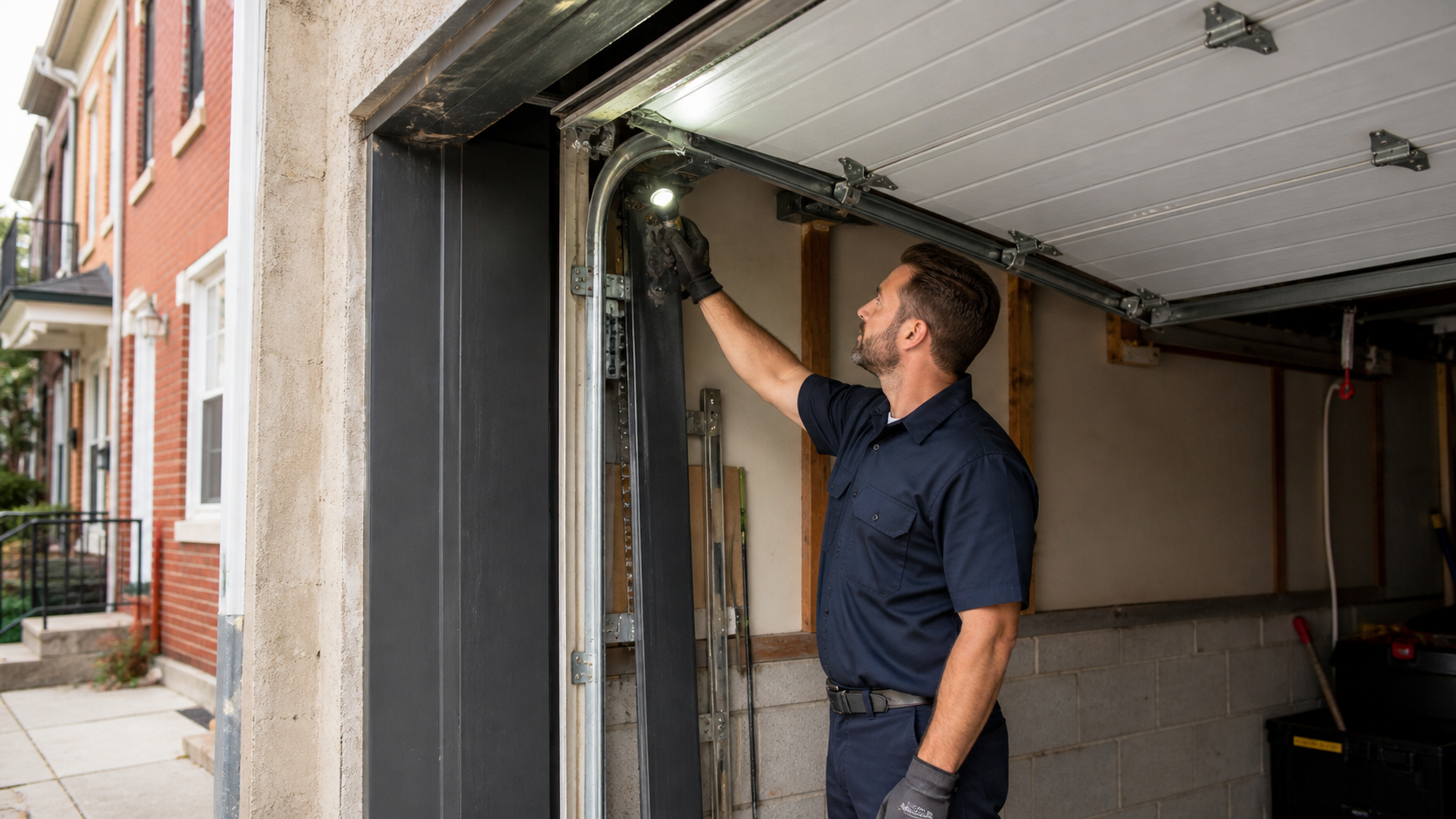
Overhead Door Repairs Near Me in Philadelphia: What to Check Before You Call
If your overhead door is stuck, noisy, crooked, or refusing to open, you probably want a garage door repair company near you—not a generic maintenance checklist. Philadelphia homeowners can often narrow the problem quickly by identifying the symptom, making the opening safe, and asking the right questions before booking a service call.
This guide covers the common reasons an overhead garage door fails, what you can safely check, when to stop troubleshooting, and how to compare Philadelphia-area repair providers.
Common signs your overhead door needs repair
Garage door problems tend to show up in a few recognizable ways:
- The door will not open or close. The opener may have lost power, the remote may need a new battery, or the photo-eye sensors may be blocked or misaligned.
- The door reverses or stops partway. Sensor alignment, track resistance, worn rollers, or an opener setting may be involved.
- The door is loud, jerky, or uneven. Grinding, scraping, popping, and binding can point to worn rollers, loose hardware, track problems, or a door that has moved out of balance.
- One side hangs lower than the other. A damaged cable, spring problem, bent track, or shifted hardware can make the door unsafe to operate.
- The door is visibly off its track. Do not force it up or down. A professional should inspect the tracks, rollers, cables, and supporting hardware.
- The door closes but will not seal. Damaged bottom weatherstripping, a deteriorated threshold, or a door that is no longer sitting square can allow drafts, water, and pests into the garage.
Philadelphia’s attached homes and older garages can add complications. Limited driveway space, shared walls, masonry openings, aging electrical components, and previous renovations can affect access and the repair scope. Give the technician a clear description of the symptom and tell them whether the door is attached to an automatic opener.
What you can check safely before calling
A few low-risk checks may help you describe the issue:
- Confirm that the opener has power and that the wall control is not locked.
- Replace the remote battery or try the wall button.
- Look at the photo-eye sensors near the bottom of the opening. Remove dirt or cobwebs and check that both indicator lights behave normally.
- Make sure nothing is blocking the door’s path.
- Listen for the sound the opener makes. A hum without movement is different from a completely silent opener.
- Take a photo of visible damage, such as a bent track, broken hinge, frayed cable, or separated panel.
Do not pull on loose cables, adjust torsion springs, remove spring hardware, or force a heavy door open. Springs and cables store significant energy, and an apparently small adjustment can create a serious injury risk. If the door is crooked, partially collapsed, or hanging from one side, keep people and vehicles clear until it has been inspected.
The U.S. Consumer Product Safety Commission’s garage-door safety guidance is a useful reference for safe operation and opener-related hazards.
Repair or replacement: what should you ask?
A broken spring, worn roller, failed sensor, damaged hinge, loose bracket, or opener problem may be repairable. A badly rusted door, repeated panel damage, severe track distortion, or an opener that no longer supports the door may lead to a replacement discussion.
Ask the technician to separate the diagnosis from optional upgrades. A written estimate should identify:
- The failed or worn components
- The proposed repair or replacement scope
- Parts, labor, service-call charges, and any trip fee
- Whether removal and disposal are included
- Whether the work includes testing the balance, travel limits, and safety reversal
- What warranty applies to parts and labor
- What conditions could increase the price
Be cautious of a quote that recommends replacing the entire door without explaining the failed component, or a quote that is so vague you cannot tell what is included. You do not need to authorize additional work until you understand the scope.
How to compare garage door repair companies near Philadelphia
Start with providers that clearly describe garage door repair, service calls, or installation—not only general door sales. Ask whether the company serves your neighborhood, whether it works on your door and opener type, and whether it can provide a written estimate before beginning non-emergency work.
For Pennsylvania residential home-improvement work, ask for the contractor’s Home Improvement Contractor registration information when applicable and verify the business and contract details yourself. The Commonwealth’s contractor guidance explains that most home-improvement contractors must register with the Pennsylvania Attorney General’s Office, while Pennsylvania does not issue one general contractor license covering every construction business.
You can also use the Philadelphia garage door supplier category to build a shortlist. Current directory entries include High Quality Garage Doors, Experts Garage Doors, Overhead Garage Doors, and American Garage Door Supplies & Repairs. These are directory listings, not endorsements; confirm current service areas, credentials, insurance, pricing, availability, and warranty terms before hiring.
Questions to ask before booking
Use this short checklist when you call:
- Do you repair my door and opener type?
- Can you diagnose the problem before recommending replacement?
- Is there a service-call or after-hours fee?
- Will I receive a written estimate before additional work?
- Are parts and labor covered by separate warranties?
- Will you test the door balance, safety sensors, and automatic reversal after the repair?
- Are you registered for Pennsylvania home-improvement work when registration applies?
- Do you carry liability insurance?
- What should I do with the door until the appointment?
- What access do you need to the garage, driveway, or electrical panel?
Before the technician arrives
Clear vehicles and stored items away from the door and opener. Keep children and pets out of the garage. If the door is stuck open, secure the area and ask the company whether you should leave it in place or disconnect anything. Have the model information for the opener available if you can find it without climbing or moving around the door mechanism.
For broader seasonal upkeep, the Philadelphia rowhome maintenance calendar can help you add garage-door inspection to a larger home-maintenance routine.
The best repair decision is usually the one that restores safe, reliable operation with a clearly explained scope. Identify the symptom, avoid high-tension components, compare written estimates, and verify the provider before work begins.