
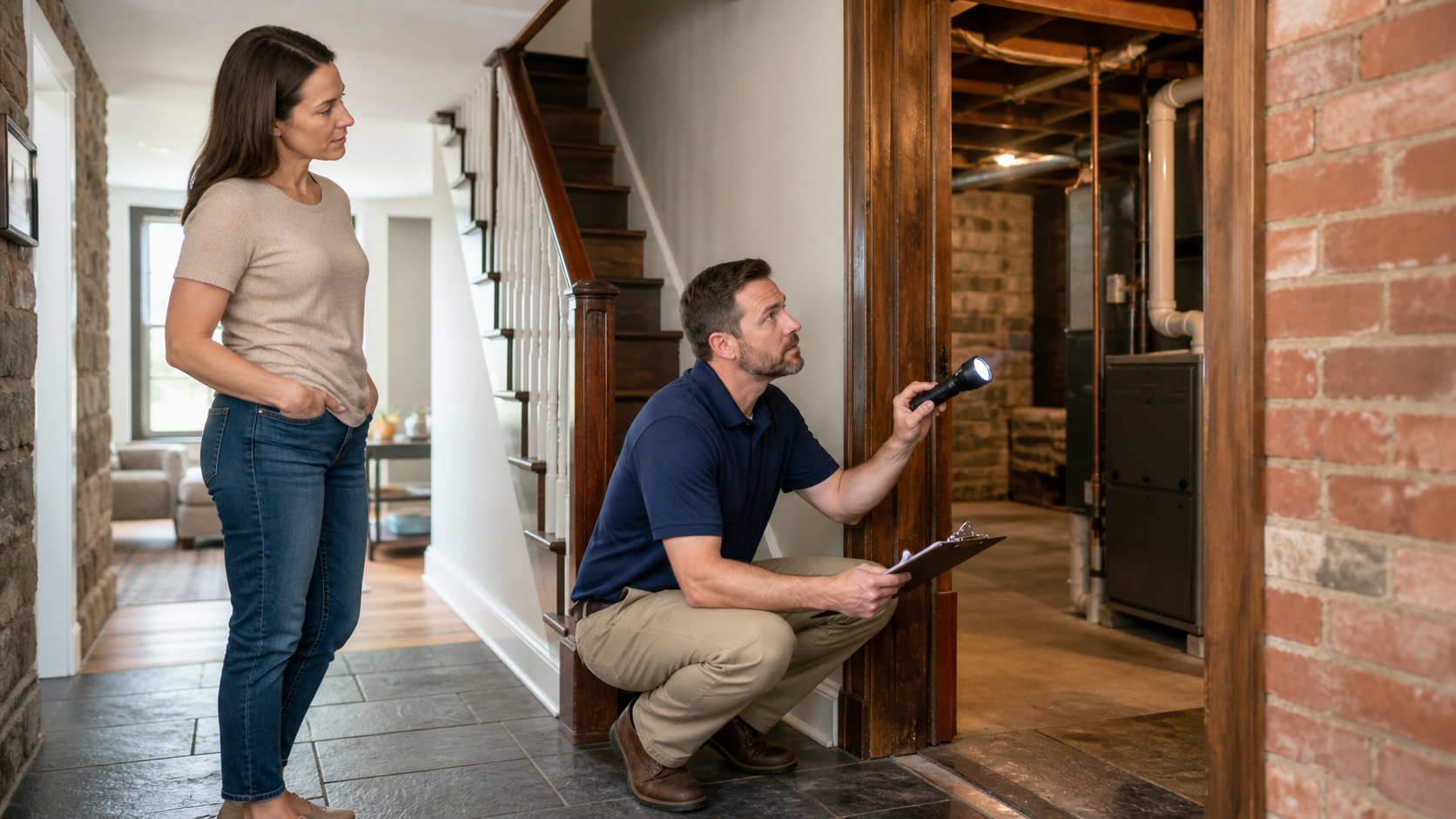
Buying a Philadelphia rowhome, twin, or older suburban property is a major commitment. A home inspection gives you a clearer picture of the building before you finalize the purchase, but the value depends on choosing the right inspector and asking for the right scope.
This guide explains what a buyer should confirm before booking a home inspection, what deserves special attention in Philadelphia housing, and how to compare the final reports.
What a home inspection is—and what it is not
Under Pennsylvania's Home Inspection Law, a home inspection is generally a noninvasive visual examination of some combination of a home's structural and essential components and its mechanical, electrical, or plumbing systems in connection with a possible residential real-estate transfer. It is not a guarantee that every defect will be found, and it is not a substitute for a specialist evaluation when the inspector sees a concern.
Ask the inspector for the written scope of the inspection before you pay. Confirm whether the inspection includes the roof surface, attic, basement, foundation, heating and cooling equipment, electrical service, plumbing fixtures, visible insulation, windows, doors, and permanently installed appliances. Also ask which areas are excluded because they are inaccessible or unsafe.
For current Pennsylvania definitions and requirements, review the Pennsylvania Home Inspection Law.
Check Philadelphia licensing and insurance
Philadelphia has its own home-inspector license process. Before hiring someone, ask for the business name and City license information, then confirm that the license is current. The City's application materials also describe insurance and professional-certification requirements, so ask the inspector to explain how their credentials and coverage apply to the job you are buying.
You should also request proof of general liability and professional liability insurance. A directory listing can help you build a shortlist, but it is not a substitute for checking current credentials, insurance, and contract terms yourself.
The City of Philadelphia home-inspector license application is a useful reference for the City's current requirements.
Ask about experience with Philadelphia housing
Philadelphia properties often have details that deserve more than a quick checklist pass. In a rowhome, shared party walls can make moisture, roof, chimney, and plumbing conditions harder to understand from one unit alone. Older homes may also contain dated wiring, galvanized supply piping, cast-iron drains, masonry movement, or additions that were completed under older standards.
Ask whether the inspector regularly evaluates homes of similar age and construction. Useful questions include:
- Have you inspected brick rowhomes or other attached Philadelphia housing?
- How do you document moisture around parapets, roof lines, basements, and party walls?
- Do you inspect the main electrical service and identify obsolete or hazardous components?
- How do you evaluate visible plumbing materials and drainage concerns?
- Will you explain which observations need a specialist or a permit-history review?
The goal is not to find an inspector who predicts every future repair. It is to find one who can identify visible conditions, explain their significance, and tell you when additional evaluation is warranted.
Confirm the inspection covers the areas buyers skip
When you tour a property, it is easy to focus on the kitchen, bathrooms, and cosmetic finishes. During the inspection, pay attention to the less photogenic systems that can drive ownership costs:
- Roof coverings, flashing, gutters, downspouts, and visible drainage paths
- Basement walls, floors, sump pumps, moisture staining, and musty odors
- Foundation walls, exposed framing, and signs of movement or water entry
- Heating and cooling equipment, age, service labels, and accessible ductwork
- Electrical panel, visible wiring, grounding, outlets, and safety devices
- Water heater, shutoffs, supply lines, drains, and visible leaks
- Attic ventilation, insulation, roof framing, and evidence of pests
- Windows, exterior doors, masonry, railings, steps, and porch structures
For permitted construction and repair work, remember that a private inspection and a City code inspection serve different purposes. Philadelphia's Department of Licenses and Inspections explains its role in reviewing permitted construction and scheduling required inspections on its construction inspections page.
Ask whether specialist inspections are needed
A general home inspection may identify a concern without diagnosing the underlying cause. Depending on the property, your inspector may recommend a roofer, structural engineer, electrician, plumber, chimney professional, HVAC technician, pest professional, or environmental specialist.
This is especially important when a report mentions active moisture, suspected underground oil tanks, a private sewer or water main, significant masonry cracking, aluminum wiring, knob-and-tube wiring, an aging roof, or a heating system near the end of its expected service life. Ask what should be evaluated before your inspection contingency expires and whether the inspector can provide a clear written reason for the referral.
Understand the report before you negotiate
Ask to see a sample report before booking. A useful report should distinguish between routine maintenance, a material defect, a safety concern, and an item that needs specialist evaluation. It should include clear photographs, locations, explanations, and practical next steps rather than a long list of unexplained technical labels.
During the inspection, attend if the inspector allows it. Take notes, ask questions, and request a short walk-through at the end. The final report should support your decision; it should not replace your judgment or turn every minor observation into a crisis.
If the report identifies a major concern, do not rely on a quick internet estimate. Get a qualified specialist to inspect the condition and provide a written scope. For work that may require permits, verify the requirements with Philadelphia L&I and make sure the contract identifies who will handle permits and inspections.
Questions to ask before you hire
Use this checklist when calling Philadelphia home inspectors:
- Are you currently licensed to perform home inspections in Philadelphia?
- What insurance coverage do you carry, and can you provide a certificate?
- How many attached or older Philadelphia homes have you inspected recently?
- What systems and areas are included in your standard inspection?
- What conditions or spaces are excluded from the inspection?
- Can I attend the inspection and ask questions during the walk-through?
- When will I receive the report, and what format will it use?
- How do you handle recommendations for specialist evaluations?
- What is included in the fee, and what costs extra?
- Do you offer a follow-up call to explain the report?
Find a Philadelphia home inspector
You can use the Philadelphia home inspector category to compare active directory listings. Current listings include ASAP Lead Testing and Locksmith Services, Fast Mold Testing - Philadelphia, and ValueGuard Home Inspections. Directory inclusion is not an endorsement, so confirm licensing, insurance, scope, and availability before booking.
For ongoing ownership planning after you buy, see the Philadelphia rowhome maintenance calendar. A careful inspection can help you make a better purchase decision, but the most useful result is a prioritized understanding of what the property needs now, what can wait, and which questions deserve a specialist's answer.