
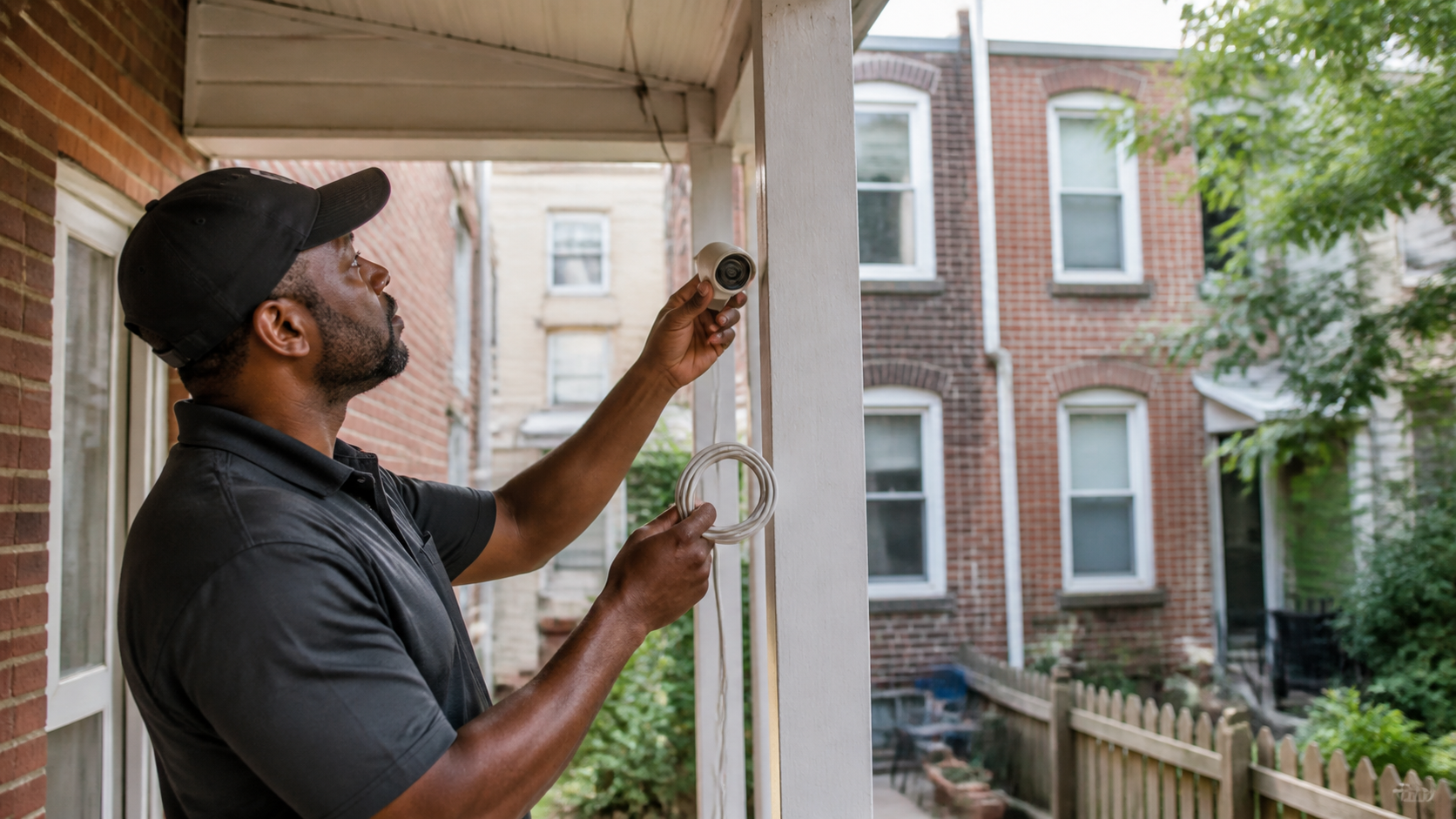
Security cameras can improve visibility around entrances, alleys, porches, garages, and shared approaches, but the installation should account for power, network coverage, weather, privacy, storage, and maintenance. A camera that cannot reliably record or be serviced is not a complete security plan.
Decide what you need to see, where footage will be stored, how cameras will receive power, and who can access the account. Then compare installation proposals that identify equipment, wiring, configuration, maintenance, and any subscription costs.
Choose the views before the equipment
Walk the property at daytime and nighttime and identify entry doors, rear yards, side alleys, package areas, garage approaches, and blind spots. Avoid aiming cameras through neighbors’ windows or toward areas where people reasonably expect privacy.
Consider lighting, glare, rain, snow, tree growth, and the camera’s ability to identify a person rather than merely capture movement. A wider view is not always a more useful view.
Wired, wireless, and power questions
Wireless cameras still need power and dependable network coverage. Wired systems may require routing through masonry, trim, basements, or finished areas. Ask how the installer protects penetrations and what happens if the internet or power fails.
Confirm whether the proposal includes cables, power supplies, mounting, weather sealing, network configuration, app setup, firmware updates, and testing at each camera location.
Storage, alerts, and access
Ask whether footage is stored locally, in the cloud, or both; how long it is retained; what subscription is required; and how clips are exported. Confirm who owns the account, how passwords are transferred, and how additional household members receive access.
Motion alerts can become noisy if the system is not configured around sidewalks, traffic, trees, pets, or neighboring movement. Ask for practical alert zones and privacy masking where the equipment supports it.
Philadelphia installation logistics
Rowhomes may have brick façades, shared walls, narrow rear access, porches, alleys, and limited exterior mounting options. Tell the installer about landlord, condominium, neighbor, or shared-building rules before work begins.
If new circuits, outlets, conduit, masonry penetrations, or low-voltage wiring are involved, ask which parts are included and which qualified trade handles them. Get the final camera map and equipment list for future service.
Map the views before buying equipment
Sketch the front entry, steps, side passage, rear yard, alley approach, parking area, and any package drop zone. Mark where faces, license plates, doorways, and neighboring windows would appear. Decide which areas require recording, which need only a light or notification, and where privacy should be protected.
Test the view at day and night if possible. Glare from porch lights, brick walls, glass, tree movement, and narrow rowhome sightlines can affect image quality more than a product’s headline resolution.
Plan for reliability and ownership
Ask how power, Wi-Fi, network storage, cloud storage, firmware updates, user permissions, and device replacement will be handled. Wired systems can require drilling and cable routing; wireless systems still need stable signal, charging or power, and secure account access. Outdoor equipment should be suitable for the weather and mounted where it can be serviced.
The installation scope should identify mounting, cable concealment, app setup, testing, user training, and cleanup. Change default passwords, enable multi-factor authentication where available, and decide who can access recordings before the system goes live.
A Philadelphia comparison checklist
Philadelphia security layouts often need to cover a front entrance and a rear or alley approach without creating unnecessary views into neighboring homes. A short camera map can make the installation more intentional and easier to maintain.
Before you request or approve work, keep these details together:
- What exact area will each camera cover?
- How are power and network reliability handled?
- Where is footage stored and for how long?
- What subscriptions or replacement costs apply?
- Who owns the account and administrator access?
- What wiring, mounting, and weather sealing are included?
Local providers and related guides
Use the Philadelphia security system installation directory to compare local providers, including FlyLock Security Solutions, Safe Protect, TeamTech Security, NoLimiTech. Directory inclusion is not an endorsement; confirm current services, availability, licensing, insurance, and the written scope directly.
For related planning help, see Do You Need a Licensed Security Guard Company in Philadelphia? and How to Choose an Electrician in Philadelphia and A Philadelphia Rowhome Maintenance Calendar.
Bottom line
A good camera installation is a combination of sightlines, reliable power, secure account access, and a clear maintenance plan. Compare the complete system rather than the camera count alone.