
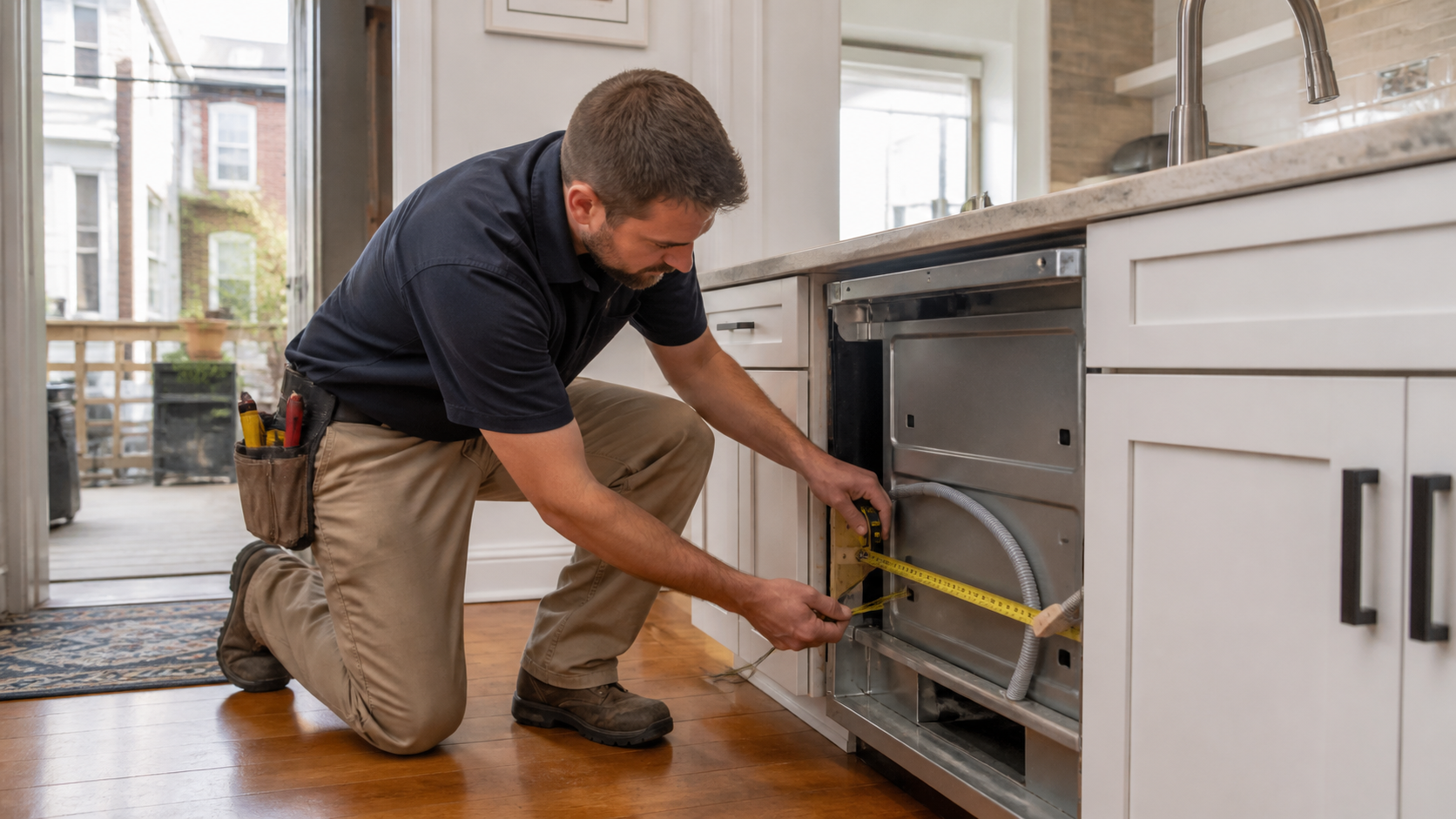
Replacing or installing an appliance in a Philadelphia rowhome is a fit-and-connections project, not just a delivery appointment. Doorways, stairs, cabinets, outlets, shutoffs, venting, and the final appliance dimensions all need to line up.
Before ordering, measure the opening and route, photograph the existing connections, and confirm who handles disconnection, installation, testing, haul-away, and any electrical, plumbing, gas, or venting work outside the appliance itself.
Measure the appliance and the route
Measure the opening at several points, including height, width, depth, trim clearance, and the path from the street or loading area. Check door swings, stair turns, railings, tight hallways, and whether doors or cabinet trim must be removed.
For stacked laundry, built-ins, counter-depth refrigerators, and ranges, compare the manufacturer’s installation requirements with the actual room. A unit can fit the opening but still fail to clear a wall, door, counter, or ventilation space.
Document connections before removal
Photograph the outlet, water supply, drain, gas connection, vent, shutoff, and floor condition before the old unit moves. Labeling the photos can help the installer understand what is already present, but do not modify live connections yourself.
Ask whether the provider will disconnect and reconnect each service. Appliance delivery, appliance installation, electrical changes, gas work, plumbing changes, and carpentry may be separate scopes.
Clarify the installation scope
A written installation scope should identify leveling, anchoring, hoses, cords, anti-tip hardware where applicable, testing, packaging removal, and haul-away. Ask whether the provider supplies standard connection parts or charges separately for upgraded hoses, valves, venting, or adapters.
If the installation requires a new circuit, moved outlet, new gas line, changed vent, or altered plumbing, ask which qualified trade handles that work and whether any permit or inspection may apply.
Plan for the rowhome appointment
Clear the path, protect floors, move fragile items, and reserve parking or loading space if possible. Tell the installer about basement stairs, shared hallways, narrow rear access, and building rules.
Do not schedule the final installation until the appliance is on site, undamaged, and confirmed to match the ordered model. Keep the model number, warranty information, delivery receipt, and installation checklist together.
Confirm utilities and clearances
Before delivery, identify the shutoff valves, outlet, gas connection if applicable, drain, vent, water line, and the required clearance around the appliance. Photograph the existing setup before disconnecting anything. If the new model needs a different outlet, valve, vent, drain, or cabinet opening, identify that work before the delivery date.
Do not assume an installer will modify every connection or cabinet. Ask what is included and which changes require a licensed plumber, electrician, carpenter, or general contractor. This keeps the installation appointment from turning into an unexpected multi-trade project.
Protect the route and the finished space
Measure the appliance, packaging, stair turns, hallways, door openings, and any gate or shared entry along the route. Remove rugs, fragile décor, and obstacles. For a rowhome, think about the front steps, tight corners, basement stairs, and whether a door or railing needs temporary removal.
Confirm who removes the old appliance, takes away packaging, reconnects utilities, tests the unit, and handles the old unit. Keep the manufacturer’s installation requirements available and do not use an appliance until required connections and safety checks are complete.
A Philadelphia comparison checklist
Older Philadelphia kitchens and laundry areas often have tight clearances and connections that have been adapted over time. A careful pre-installation review can prevent a delivery-day surprise and clarify which work belongs to the appliance installer versus another trade.
Before you request or approve work, keep these details together:
- Who measures the opening and access route?
- Who disconnects and reconnects water, gas, electrical, and venting?
- Are standard connection parts included?
- Is haul-away included?
- What happens if the appliance does not fit or arrives damaged?
- Who tests the appliance and documents the completed installation?
Local providers and related guides
Use the Philadelphia appliance service directory to compare local providers, including MrFix Appliance Repair, Best Appliance Repair, Philly Appliances Repair, Appliance Repair Brothers. Directory inclusion is not an endorsement; confirm current services, availability, licensing, insurance, and the written scope directly.
For related planning help, see Appliance Repair in Philadelphia and A Philadelphia Rowhome Maintenance Calendar.
Bottom line
The best appliance-installation appointment starts before delivery. Measurements, photos, and a written scope will protect your schedule and your rowhome finishes.