
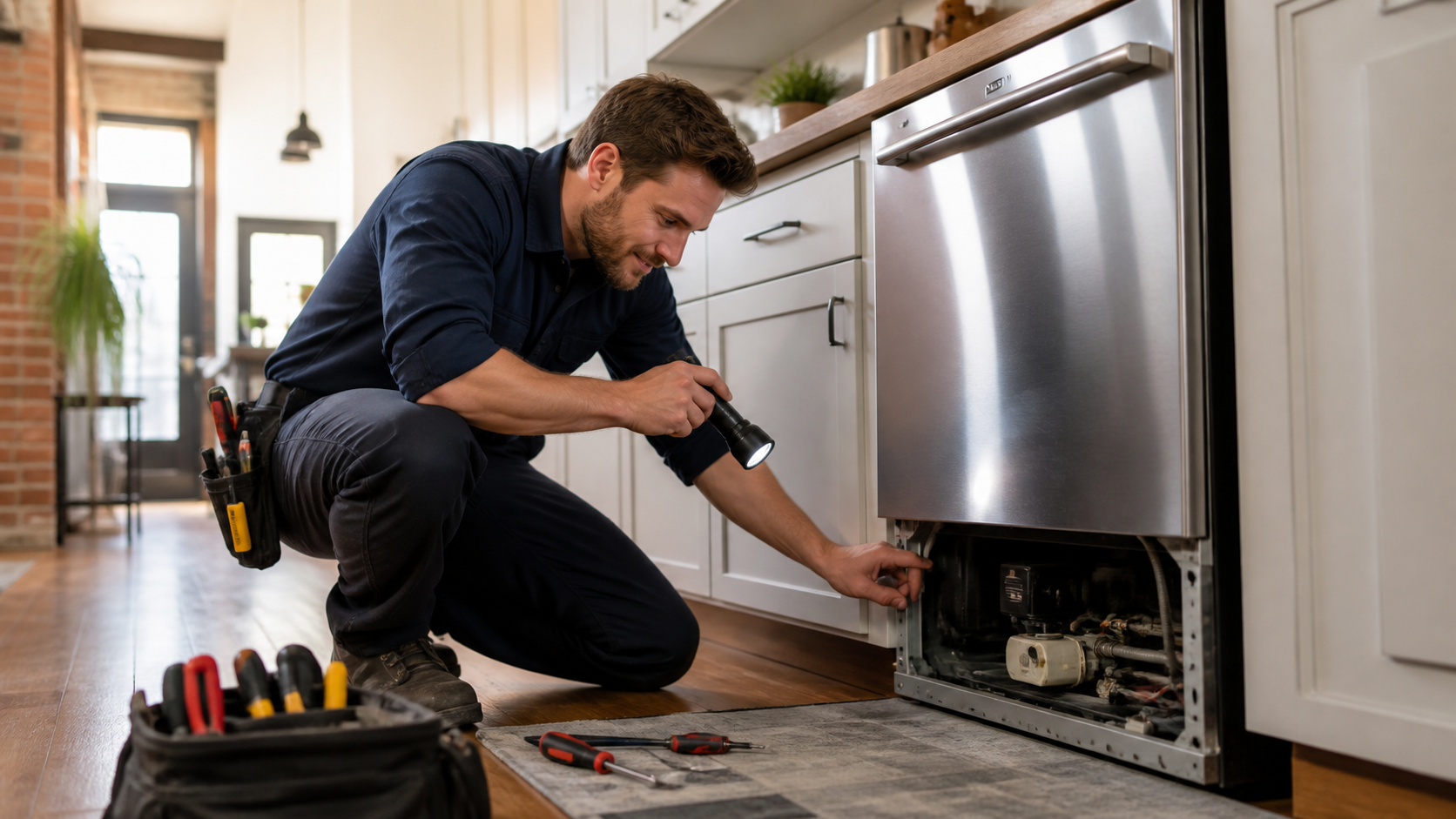
When an appliance stops working, the fastest answer is not always “replace it.” Repair can make sense when the appliance is relatively young, the failure is straightforward, and parts are available. Replacement may be more practical when the unit has repeated failures, obsolete parts, or a repair cost that approaches the value of a comparable new appliance.
Use this checklist before booking appliance repair in Philadelphia.
Quick answer: repair or replace?
Start with three questions:
- What failed? A door seal, water valve, fan, igniter, belt, or similar component may be worth diagnosing. A sealed-system problem, major control-board failure, or repeated electrical issue deserves a closer repair-versus-replace comparison.
- How much life is left? Consider the appliance’s age, maintenance history, condition, energy use, and whether the manufacturer still supports the model.
- What is the complete repair cost? Compare the diagnostic fee, parts, labor, delivery, installation, disposal, and warranty—not just the first price quoted over the phone.
A reputable technician should explain the diagnosis and the options instead of pushing a replacement before inspecting the appliance.
Record the symptom and model number
Write down what the appliance does and does not do. Does it fail to start, stop mid-cycle, leak, overheat, trip a breaker, make a grinding sound, or leave food warm? Note error codes, unusual sounds, odors, and when the problem occurs. Photograph the model and serial label before calling.
Unplug the appliance or shut off its water or gas supply only when it is safe to do so. Do not keep operating a unit that smells like gas, sparks, overheats, shows exposed wiring, leaks near an electrical connection, or trips a breaker repeatedly. In those situations, follow the manufacturer’s safety guidance and use a qualified professional. If you smell gas, leave the area and contact the appropriate emergency utility service.
Decide whether repair is worth investigating
Ask the technician to separate the diagnostic fee, parts, labor, delivery, installation, and disposal. Compare the estimate with the appliance’s age, condition, warranty status, replacement cost, and expected service life. A refrigerator with a simple fan or control failure is a different decision from one with a sealed-system leak. A washer with a replaceable pump is a different decision from one with repeated control and motor problems.
Check the manufacturer’s warranty before authorizing work. Also search the U.S. Consumer Product Safety Commission recalls database using the brand and model number. A recall or safety notice can change who should perform the repair and whether a covered remedy is available.
Before replacing a built-in or specialty appliance, measure the opening, door swing, hallway, stairway, and final connection locations. A new unit that does not fit the existing opening can turn a simple replacement into a cabinet, countertop, electrical, plumbing, or venting project.
Match the technician to the appliance
Ask whether the company regularly services your brand and appliance type:
- Refrigerators and freezers
- Ranges, ovens, and cooktops
- Dishwashers and garbage disposals
- Washers and dryers
- Built-in or stacked units
- Small appliances and specialty equipment
If the work involves a refrigeration circuit, ask whether the technician holds the applicable EPA Section 608 certification. Ask who will obtain parts, how long they are warrantied, and what happens if the first repair does not solve the problem.
For gas ranges, dryers, or other gas-connected equipment, ask who handles the gas connection and what qualifications apply. If the job changes wiring, adds a circuit, moves a gas line, changes plumbing, or modifies a vent, confirm whether a separate qualified trade and any required permit or inspection are part of the scope. Appliance repair and appliance installation are not always the same job.
Philadelphia access matters
Philadelphia rowhome kitchens and laundry areas may involve tight clearances, narrow stairs, stacked appliances, older electrical panels, hidden water shutoffs, or appliances installed behind custom cabinetry. Tell the company about the access route and whether the appliance is built in.
Ask who disconnects and reconnects water, gas, venting, or electrical connections. Confirm whether doors, trim, counters, or cabinets need to be removed and replaced. Clarify responsibility for floor protection and any damage caused during moving.
Protect floors and cabinets before the visit. Remove items from the appliance and clear a path from the street or parking area to the work location. If parking, stairs, a basement laundry area, or a shared hallway could affect the appointment, mention it when requesting the estimate.
Get the estimate in writing
A written estimate should identify:
- The appliance brand, model, and reported symptom
- The diagnosis and recommended repair
- Part numbers when known
- Labor, trip, and diagnostic charges
- Taxes, delivery, installation, and disposal
- The repair warranty and what it covers
- Payment terms and the expected timeline
- What happens if an additional failed component is found
Ask whether the diagnostic fee is applied to the repair and whether a return visit is included if a part must be ordered. Do not approve a major repair based only on a vague “starting at” price. If replacement is recommended, ask whether the technician can explain why repair is not economical and whether the old unit can be safely disconnected and hauled away.
Questions to ask before scheduling
Use these questions when comparing appliance repair services in Philadelphia:
- Do you service my brand and exact appliance type?
- Do you provide a written diagnosis and itemized estimate?
- Is there a diagnostic or trip charge, and is it credited toward repair?
- Are parts and labor covered by a warranty?
- Who handles water, gas, electrical, or vent connections?
- Can you work with a built-in, stacked, basement, or rowhome installation?
- What is the expected timeline if a part is not in stock?
- Do you offer repair, replacement, or both without pressure?
- Will you remove the old appliance if replacement is the better option?
Have the model number, photos, symptom, error code, and access details ready. Better information usually produces a more useful first estimate.
Compare Philadelphia appliance repair services
Use the Philadelphia appliance repair service directory to compare providers, including MrFix Appliance Repair, Best Appliance Repair, Philly Appliances Repair, and Appliance Repair Brothers.
If your home is in Bucks County or the northern suburbs, check whether Mr. Appliance of Doylestown serves your address and appliance type before scheduling. Directory listings are a starting point, so confirm current service areas, availability, pricing, and warranty terms directly with the provider.
For broader home-condition planning, see the Philadelphia home inspection checklist and the Philadelphia rowhome maintenance calendar.