
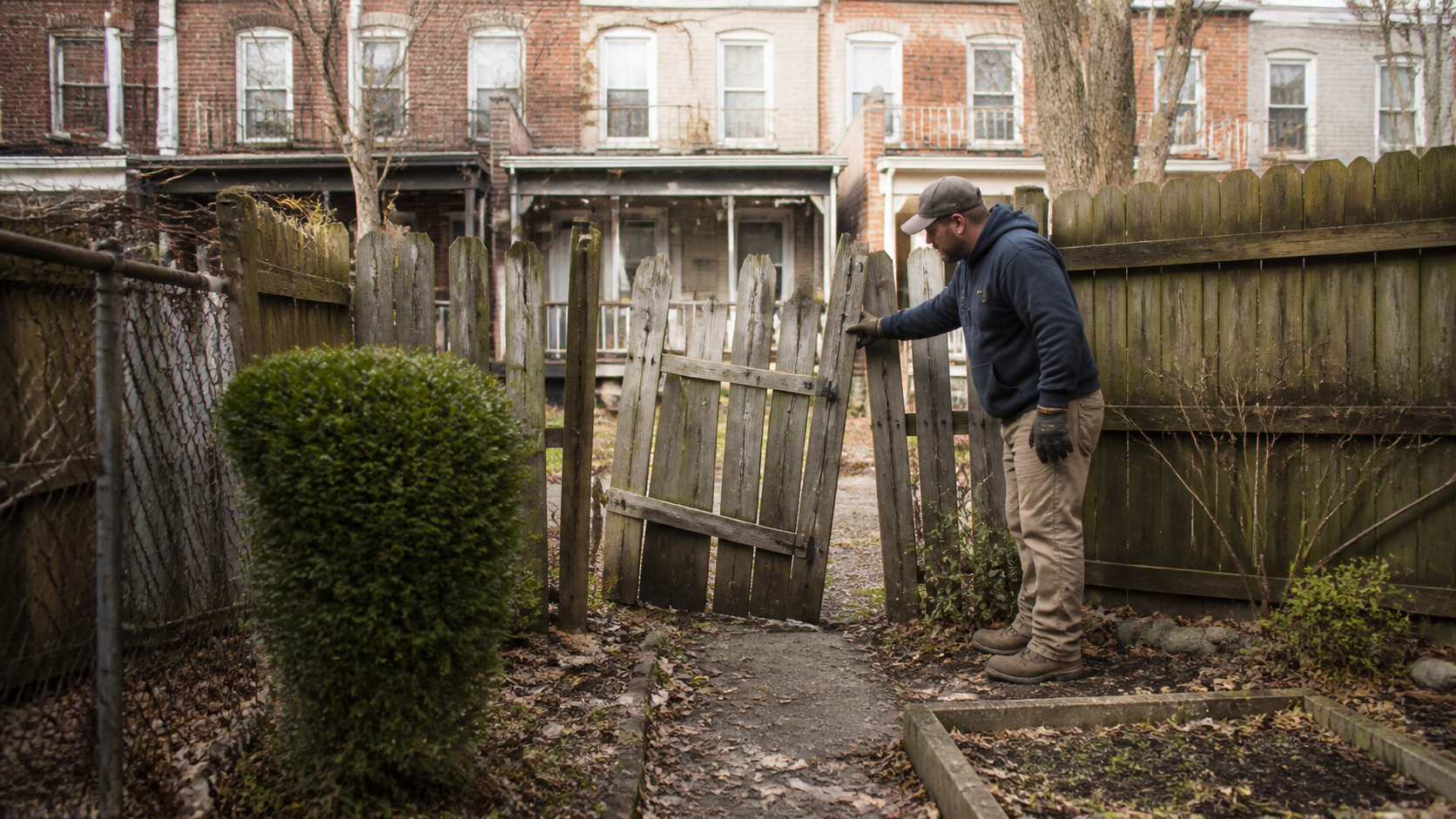
Philadelphia Fence Repair or Replacement: Posts, Materials, and Estimates
A leaning fence panel may be a small repair, or it may signal failing posts, rot, soil movement, impact, or a larger boundary problem. Before choosing repair or replacement, identify what is actually moving and what the fence is expected to do.
Inspect panels, rails, posts, gates, hinges, and the ground line. Repair can make sense when the structure is sound and the problem is localized; replacement deserves comparison when posts are failing, multiple sections are damaged, or the material no longer fits the property.
Find the failure point
Look for rot at the soil line, loose posts, split rails, lifted gates, rusted hardware, damaged panels, and gaps under the fence. Do not assume a new panel will solve a post that has lost its footing.
Photograph the damaged sections and note whether the issue followed wind, a vehicle impact, landscaping, drainage work, or ordinary aging. If the fence sits on a property line, document the location before moving it.
Repair options vary by material
Wood, vinyl, chain link, aluminum, and masonry-adjacent fences have different repair approaches. A contractor may replace one panel, reset a post, reinforce a gate, change hardware, or rebuild a section.
Ask whether the replacement material will match the existing fence and whether color, texture, fasteners, and gate alignment will be consistent. A partial repair can look different if the original material has weathered.
Philadelphia property and access factors
Small lots, alleys, retaining walls, gardens, rear yards, shared boundaries, and hard-to-reach gates can change labor and material handling. Tell the contractor about access, neighbors, pets, landscaping, and any shared or rented property.
Ask who confirms the work area and whether the proposal assumes an existing boundary. If the project affects a retaining wall, masonry, drainage, or utility route, clarify which work is included.
What the estimate should include
A useful estimate identifies demolition, post depth or repair method, materials, gates, hardware, concrete or footings, cleanup, disposal, staining or painting, and warranty. It should also say which sections are being repaired or replaced.
Compare proposals using the same height, material, gate count, access assumptions, and finish. The cheapest number can exclude posts, gate hardware, haul-away, or surface restoration.
Find out why the fence failed
A leaning panel may be a symptom of a loose post, rot below grade, wind damage, poor drainage, or a gate that is pulling the frame out of alignment. Photograph both sides of the fence, each gate, post bases, and any adjacent wall or retaining structure. Note whether the problem appears only after rain or when the gate is used.
Before authorizing work on a boundary fence, confirm who owns it and whether a neighbor needs to be notified. A contractor can help describe the physical condition, but property-line responsibility may require a separate conversation or survey.
Compare repair scope to a new run
A repair estimate should name the posts, rails, panels, hinges, latches, and concrete or soil work involved. A replacement estimate should state the total linear footage, height, material, finish, gate count, removal, disposal, access, and cleanup. Ask how the crew will protect paving, plantings, utilities, and neighboring property.
If drainage or a retaining wall is contributing to the failure, replacing the fence alone may not solve the problem. Make sure the quote explains any grading, excavation, or masonry coordination that is outside the fence contractor’s scope.
A Philadelphia comparison checklist
Philadelphia fences often sit close to neighboring structures, alleys, paved yards, or retaining walls. Planning the access route and boundary responsibilities early can prevent a repair from becoming a neighbor or drainage dispute.
Before you request or approve work, keep these details together:
- Are the posts sound?
- Can the repair match the existing material?
- Who handles gates, hardware, and finish work?
- Does the quote include demolition and disposal?
- What access or neighbor coordination is needed?
- Which parts of the work are warrantied?
Local providers and related guides
Use the Philadelphia fence contractor directory to compare local providers, including Northeast Fence & Iron Works Inc, Mayfair Fence Company, Pinecrest Fence Company, Superior Fence & Rail of Southeast Pennsylvania. Directory inclusion is not an endorsement; confirm current services, availability, licensing, insurance, and the written scope directly.
For related planning help, see How to Choose a Fence Contractor in Philadelphia and A Philadelphia Rowhome Maintenance Calendar.
Bottom line
Choose repair or replacement based on the structure, not just the most visible panel. A detailed scope will make fence proposals easier to compare.