
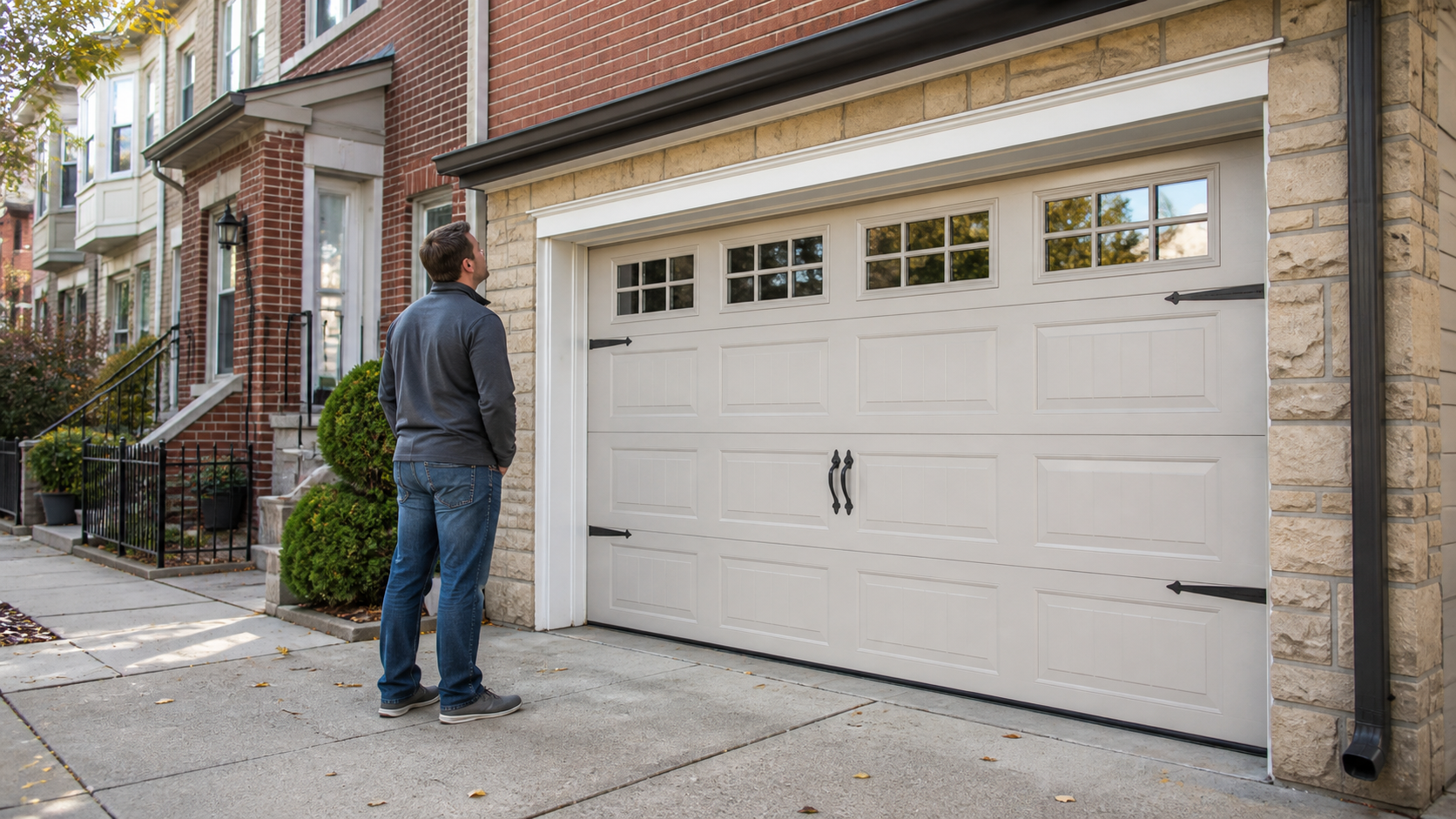
Philadelphia garages face a little more wear than a suburban setup. Many are narrow, attached to the house, exposed to winter salt and moisture, and used for storage as much as parking. A short seasonal inspection can help you catch a damaged seal, noisy roller, or misaligned sensor before the door becomes unsafe or refuses to open.
This checklist covers low-risk maintenance you can do from the ground and the warning signs that mean it is time to call a garage door professional. It is about spotting problems early—not taking apart springs, cables, or other high-tension hardware.
A 15-minute garage door inspection
Choose a dry day and keep people, pets, and vehicles clear of the opening. Start with the door closed and the opener switched off if you are inspecting the exterior.
1. Look at the door and its seal
Walk around the outside of the door and look for:
- Cracked, bowed, or separated panels
- Rust at the bottom edge or around hardware
- Gaps between the door and the frame
- A bottom seal that is brittle, flattened, or pulling away
- Water, leaves, or daylight entering at the sides
On a Philadelphia rowhome, the threshold and driveway may not be perfectly level. A small gap is not automatically a door failure, but a new or widening gap can point to a door that is out of square, a worn seal, or a settling problem that deserves attention.
2. Check the tracks without adjusting them
The vertical and horizontal tracks should look straight and firmly attached. Look for dents, loose fasteners, heavy rust, or rollers that appear to be leaving the track.
You can wipe away surface dust and cobwebs, but do not bend a track back into place or loosen hardware that supports the door. If a roller is outside the track, the door is crooked, or one side is hanging lower, stop operating it and arrange an inspection.
3. Listen during one normal cycle
From a safe position, use the wall control to open and close the door once. Pay attention to changes from its usual sound:
- Grinding or scraping can indicate roller, track, or hardware wear.
- A popping sound can signal a spring or cable problem.
- A hum without movement may mean the opener is running but the door is not transferring motion correctly.
- Shaking, jerking, or stopping partway may indicate resistance, balance, sensor, or opener trouble.
Do not keep cycling the door to “see if it gets better.” Repeated operation can turn a small mechanical problem into a stuck or damaged door.
4. Clean and check the photo-eye sensors
Most automatic openers have small photo-eye sensors near the bottom of each side of the opening. Keep the lenses clear of dirt, cobwebs, and stored items. Confirm that both sensors are mounted at a similar height and that nothing blocks the beam.
Do not remove the sensors or bypass them. If the door will not close because the sensors are misaligned, a technician can diagnose the mounting and wiring safely.
5. Test the safety reversal only if the door is operating normally
The Consumer Product Safety Commission recommends testing garage-door opener safety features as part of regular upkeep. Use the manufacturer’s instructions and stop immediately if the door behaves unexpectedly. Never place a person, pet, or valuable object in the door’s path.
If the door is already crooked, unusually heavy, partially detached, or making a sharp popping sound, skip testing and call for service. The CPSC garage-door safety guidance is a useful reference for safe operation.
Seasonal maintenance for Philadelphia homes
Before winter
Inspect the bottom and side seals before cold weather arrives. A damaged seal can allow drafts, water, and pests into an attached garage. Clear leaves from the threshold and make sure downspouts are not directing water toward the opening.
Salt and grit from city streets can collect near the bottom panel and hardware. Clean visible residue with a damp cloth and dry the area. Do not spray lubricant onto the floor or onto electrical components.
After winter
Look for rust, swelling, and corrosion after periods of snow, ice, and road salt. Check whether the door still closes evenly and whether the weather seal has hardened or split.
Philadelphia’s freeze-and-thaw cycles can also expose a driveway or threshold that has shifted. If the door worked normally before winter and now rubs, leaves a new gap, or reverses unexpectedly, describe that change when you call.
During summer
Heat and humidity can make an attached garage uncomfortable and can accelerate deterioration of seals and exposed hardware. Keep stored items away from the tracks and opener. If your garage doubles as a workshop, control dust so it does not build up around sensors and moving parts.
What not to do yourself
Garage doors are heavy, and springs and cables can store significant energy. Do not:
- Adjust or remove torsion or extension springs
- Pull on a frayed or loose cable
- Remove bottom brackets
- Force a door that is off its track
- Stand under a door that is partially supported
- Bypass photo-eye sensors or other safety features
- Use the opener to lift a door that feels unusually heavy
A low-risk visual check is different from a repair. If the door is stuck open, keep the opening clear and ask the service company what to do until the appointment.
When to schedule repair
Call a qualified provider when the door is visibly off track, one side drops, a cable is loose, a spring is broken, the opener runs without moving the door, or the door repeatedly reverses after basic sensor cleaning.
When you compare providers, ask whether the visit includes diagnosis, whether there is a service-call fee, and whether the written estimate separates parts, labor, and optional upgrades. Ask the technician to explain the failed component and to test balance, travel limits, sensors, and automatic reversal after the work.
You can start with the Philadelphia garage door supplier category and compare directory listings such as Tyler Garage Doors & Repairs and Kianna Garage Doors Solutions. These are directory listings, not endorsements. Confirm current service areas, credentials, insurance, pricing, and warranty terms before hiring.
For a repair-specific decision guide, see Overhead Door Repairs Near Me in Philadelphia. For a broader seasonal plan, use the Philadelphia rowhome maintenance calendar.
A quick inspection will not prevent every failure, but it can help you notice changes while the problem is still understandable. Keep the door area clear, avoid high-tension components, document visible damage, and get a clear scope before authorizing repair.