
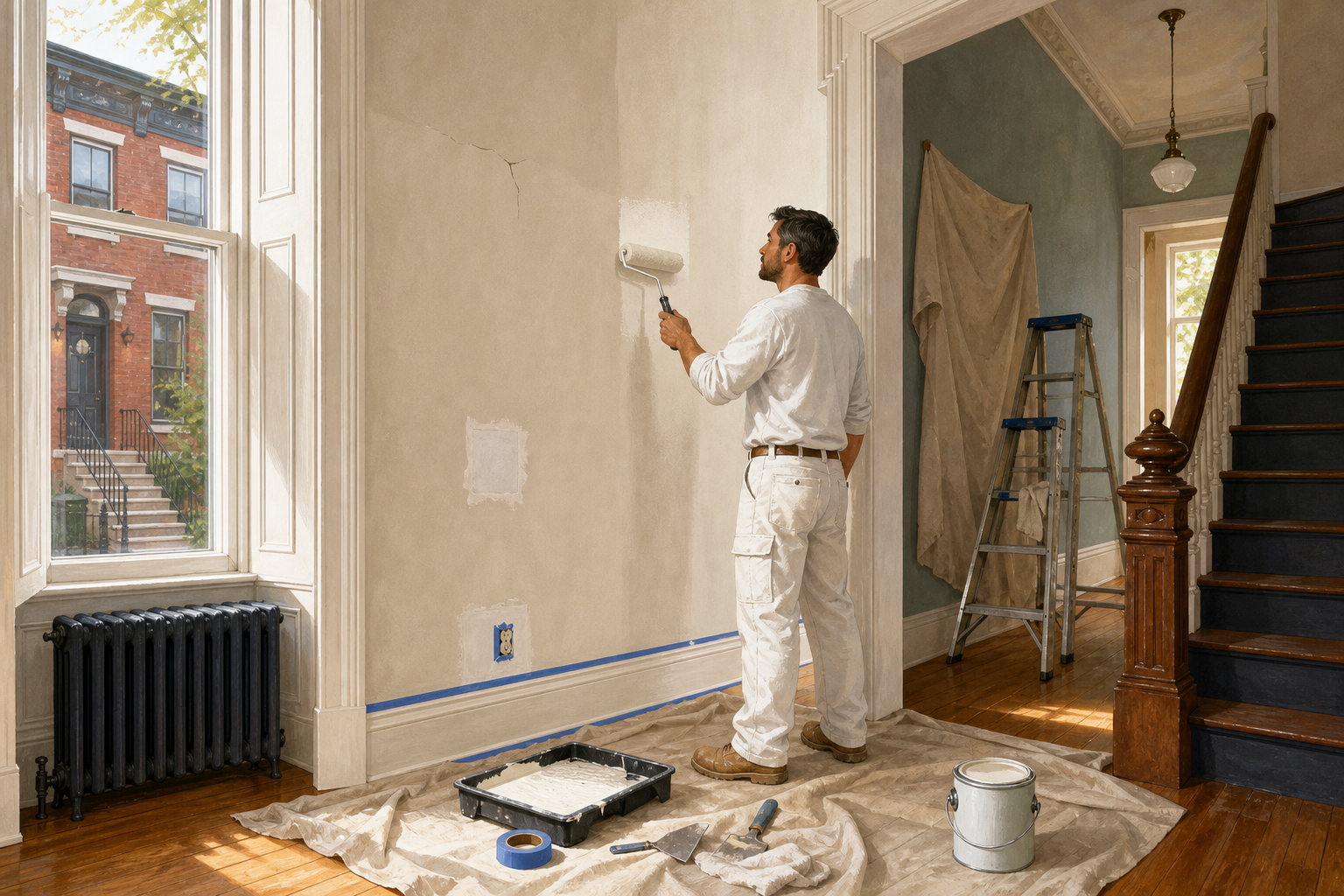
Philadelphia homes put more demands on a paint job than a blank new-build wall. A residential painter may be working around old plaster, narrow stairwells, shared party walls, radiators, built-ins, and layers of previous paint. The best hire is the one who can explain how they will protect the house, prepare the surface, and handle the specific conditions in your rowhome.
Start with the scope, not the color
Before comparing estimates, write down the rooms, surfaces, ceilings, trim, doors, closets, and repairs you want included. “Paint the first floor” can mean very different things depending on whether the walls need light sanding, patching, skim coating, caulking, or wallpaper removal.
Ask each painter to state:
- Which surfaces are included and how many coats are planned
- Whether minor drywall or plaster repairs are included
- Who moves furniture, removes wall plates, and protects floors
- Whether trim, doors, radiators, and stair rails are priced separately
- What cleanup looks like at the end of each day and at completion
For a Philadelphia rowhome, also mention narrow access, high stairwells, basement moisture, and any shared wall where vibration or dust could affect a neighbor.
Confirm registration, insurance, and lead-safety experience
Pennsylvania's Home Improvement Contractor registration information is a useful starting point when a painting project falls under the state's home-improvement rules. Registration is not an endorsement, so still ask for current proof of insurance, workers' compensation coverage, references, and a written contract.
If the home was built before 1978, ask how the crew handles possible lead-based paint. The EPA's Renovation, Repair and Painting program explains why disturbing old paint can create hazardous dust and when lead-safe practices and certified firms matter. Do not let a contractor dry-sand or aggressively scrape an older surface without explaining the containment and cleanup plan.
You can also use Philadelphia Licenses and Inspections to look up city requirements for work that goes beyond ordinary cosmetic painting.
Compare preparation details line by line
Preparation is where much of the durability comes from. A low estimate may only include a quick wipe-down and one coat over visible marks. A better estimate describes the actual prep: washing, scraping loose paint, sanding, filling nail holes, repairing cracks, spot-priming stains, caulking gaps, and protecting adjacent surfaces.
Ask what products will be used on plaster, previously glossy trim, patched drywall, kitchens, bathrooms, and basement masonry. Request the brand and finish for each area, especially if you need washable walls, low-odor paint, or a specific sheen. For a historic-looking room, ask how the painter will preserve trim profiles and avoid filling details with excess paint.
Get a written estimate and a change-order rule
A useful estimate includes labor, materials, prep, number of coats, start window, expected duration, payment schedule, and exclusions. It should also say what happens if the crew discovers water damage, failing plaster, mold-like growth, or a surface that needs more repair than expected.
Do not treat a large deposit or a rushed “today only” price as proof of quality. Ask for two or three comparable references and call them. Confirm who will actually be on site, whether subcontractors are used, and who handles touch-ups after the paint cures.
Compare Philadelphia painters
PHL Home Pros has a Philadelphia painter directory where you can compare local providers, including PAINT Philadelphia, That 1 Painter Philadelphia, Enhanced Property Appearance Painting & Renovation, and Color House Painters.
For a related maintenance decision, read Signs It’s Time to Repaint Your Philadelphia Rowhome and the Philadelphia rowhome maintenance calendar.