
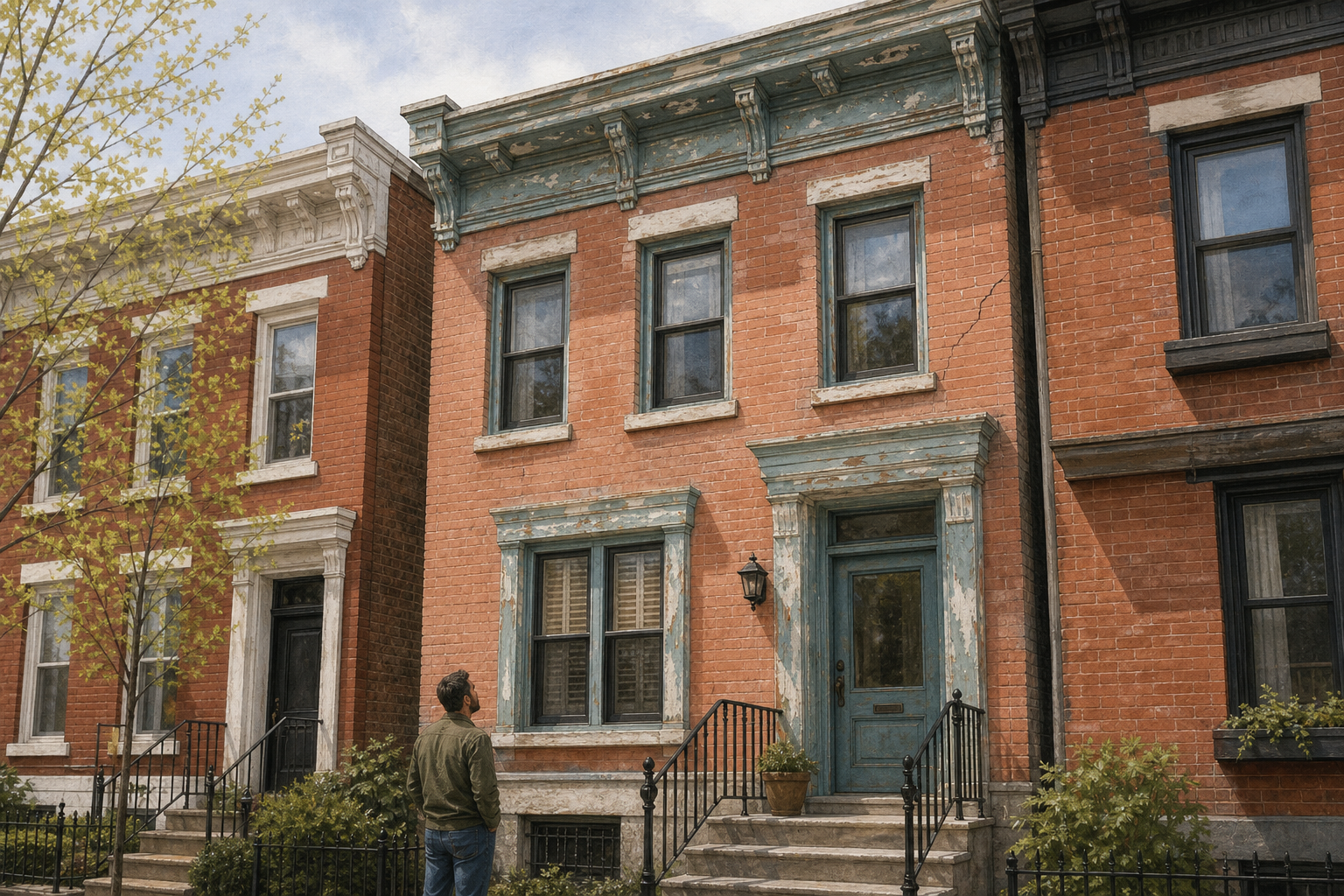
Philadelphia's rowhomes take a beating that a lot of paint jobs elsewhere never have to deal with. Humid summers, freezing winters, salt from winter street treatments, and shared party walls all wear down exterior paint faster than in more moderate climates. Here is how to tell your home is due for a fresh coat, inside or out.
1. Paint is peeling, cracking, or bubbling
This is the clearest sign there is. Peeling usually means moisture is getting underneath the paint film, either from humidity, a leak, or paint that was applied over a surface that was not fully dry. Bubbling often points to the same moisture problem. Once paint starts lifting in one spot, it tends to spread, so this is not a wait and see situation.
2. Chalking on siding or trim
Run your hand across an exterior wall. If a chalky, powdery residue comes off on your fingers, the paint's binders are breaking down from sun and weather exposure. A little chalking is normal as paint ages, but heavy chalking means the protective layer is close to gone and the surface underneath is exposed.
3. Noticeable fading, especially on south and west facing walls
Walls that get the most direct sun fade faster than shaded ones. If you notice a real color difference between your front facade and a side or rear wall, that is UV damage breaking down the pigment, not just dirt.
4. Bare or soft spots on wood trim
Cornices, window frames, and door trim are usually wood on older Philadelphia rowhomes, and wood needs paint as protection, not just appearance. If you see bare wood showing through, or if trim feels soft or spongy when you press on it, water has likely gotten into the wood itself. That needs attention before repainting, not after.
5. Cracked or failing paint around masonry and cornices
Rowhomes have a lot of masonry detail, brick facades, stucco, decorative cornices, that all need paint or sealant to keep water out. Cracks in these areas are not just cosmetic. Water that gets behind masonry paint can freeze and thaw through a Philadelphia winter, which widens the crack and causes real damage over time.
6. Water stains or discoloration on interior ceilings and walls near windows
If you are seeing brownish stains along a ceiling line or around window frames, that is often a sign the exterior seal has failed somewhere above or nearby, and water is getting into the wall assembly. This is worth investigating before it becomes a bigger repair, and a fresh coat outside is sometimes part of the fix.
7. It has been seven to ten years since the last exterior paint job
Even without visible damage, exterior paint on a Philadelphia home typically needs refreshing every seven to ten years, sometimes sooner given how much temperature swings between seasons here stress the paint film. Interior paint in high use rooms like kitchens and bathrooms tends to need attention more often, closer to every five to seven years.
8. You are getting ready to sell
Fresh paint is one of the highest return improvements for curb appeal, and buyers notice a tired looking facade before they notice almost anything else. If a sale is on the horizon, this is often the moment repainting moves from optional to worth prioritizing.
What to do next
If any of this sounds like your home, the next step is finding a painter who can assess the actual scope, not just quote a number sight unseen. Our homeowner's checklist for choosing a residential painter in Philadelphia walks through what to ask about licensing, lead paint compliance for older homes, and how to compare quotes fairly.
A few Philadelphia area painters worth a look:
Enhanced Property Appearance Painting & Renovation, Philadelphia
Rolled Right Painting LLC, Aston Township
Petrillo Painting, Philadelphia
KD Painting, Philadelphia
Or browse the full list of painters serving the Philadelphia area to compare more options and read reviews.