
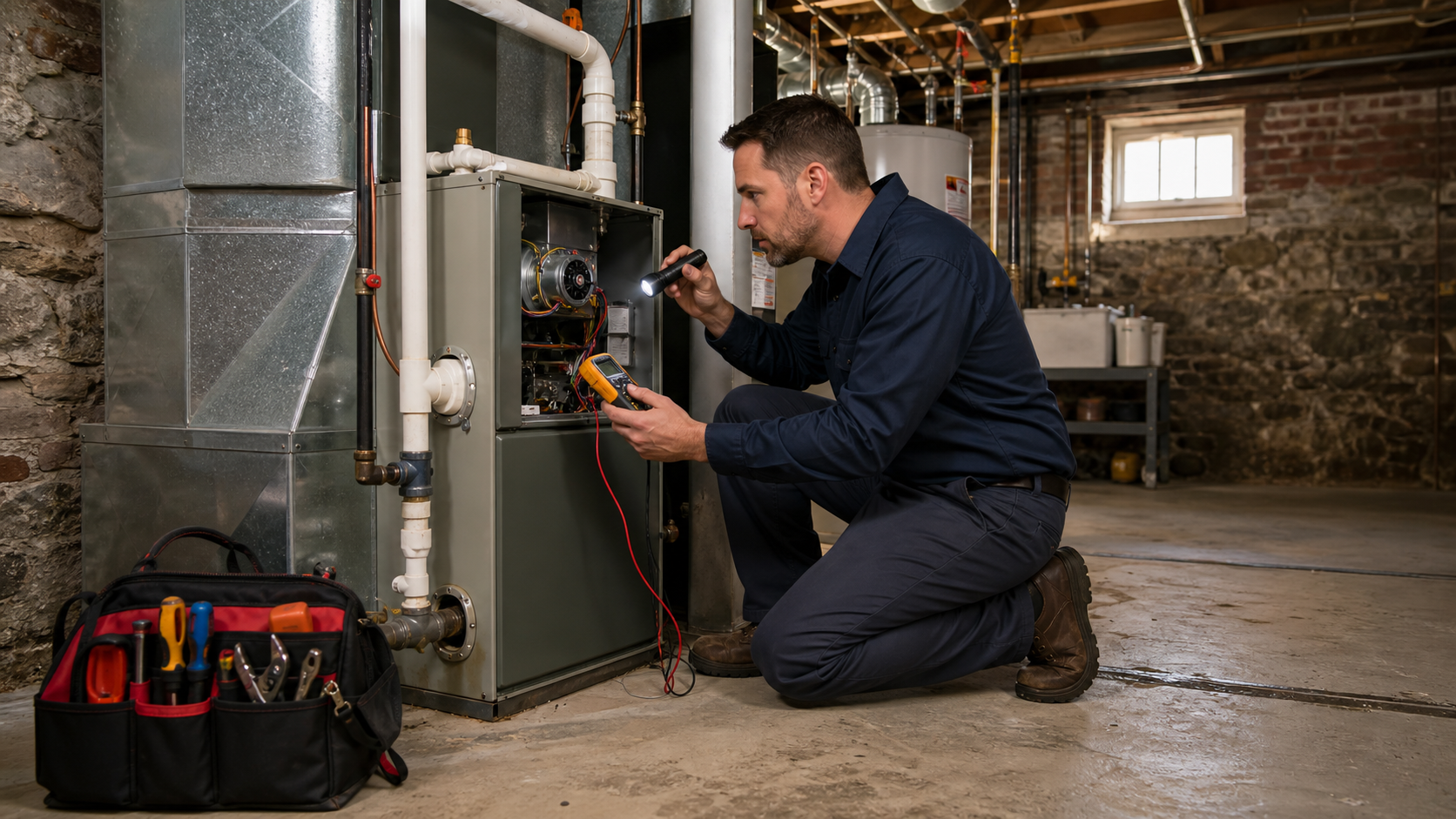
A good HVAC contractor does more than sell a replacement system. They diagnose the problem, understand the constraints of Philadelphia homes, explain repair versus replacement, and leave you with a written scope. Older rowhomes may have tight mechanical closets, uneven ductwork, oil or gas equipment, radiators, mini-splits, or basements where access and ventilation matter.
Use this checklist before you book.
Describe the symptom and the system
Record the make, model, approximate age, fuel type, thermostat setting, and symptom. Note whether the system is completely down, short-cycling, noisy, leaking, producing an odor, or failing to heat or cool only one room. Photos of the equipment label and thermostat can help a contractor prepare.
Ask whether the first visit is a diagnostic appointment or a repair visit and whether the diagnostic fee is credited toward approved work. A contractor should be able to tell you what testing supports the recommendation.
Ask about credentials, permits, and refrigerant work
When a job involves refrigerant, ask whether the technician who will connect, recover, or charge the system holds the appropriate EPA Section 608 technician certification. EPA rules apply to technicians who service equipment containing regulated refrigerants.
For equipment replacements or changes to fuel, venting, electrical, or structural conditions, ask who will verify Philadelphia permit requirements. Philadelphia Licenses and Inspections is the city's starting point for current permit and license information. For a larger home-improvement contract, ask whether Pennsylvania Home Improvement Contractor registration applies, and request insurance and a written contract.
Compare repair and replacement honestly
A repair may make sense when the equipment is otherwise reliable, the failed part is available, and the repair cost is proportionate to the system's age. Replacement may deserve a closer look when the system has repeated failures, unsafe combustion findings, severe corrosion, obsolete parts, or a major efficiency and comfort problem.
Ask for the diagnosis, the failed component, the repair warranty, and the estimated remaining service life. If replacement is recommended, compare total installed cost, equipment size, warranty, expected operating cost, duct or piping changes, electrical work, disposal, and start-up testing. Avoid choosing a system based only on the model's headline efficiency rating.
Check the Philadelphia fit
Ask how the contractor handles:
- Tight rowhome basements and mechanical closets
- Uneven or undersized ductwork
- Radiators, boilers, and mixed heating systems
- Older electrical panels and dedicated circuits
- Condensate drainage and basement humidity
- Access, floor protection, and cleanup
A contractor who explains what cannot be changed without additional work is easier to manage than one who promises perfect comfort without measuring the home.
Get a written estimate
The estimate should identify equipment and model numbers, labor, permits, line sets or duct changes, electrical work, startup and testing, warranty terms, payment schedule, and exclusions. Ask what happens if hidden conditions appear after removal of the old unit. Confirm who handles registration, inspections, and warranty paperwork.
Compare Philadelphia HVAC contractors
Use the Philadelphia HVAC contractor directory to compare providers such as Fixadelphia: Mechanical Contractors, GEN3 Electric & HVAC, CABRERA & SONS HVAC SERVICES, and Aktion Air.
For related home-service planning, see How to Choose a Plumber in Philadelphia and the Philadelphia rowhome maintenance calendar.