
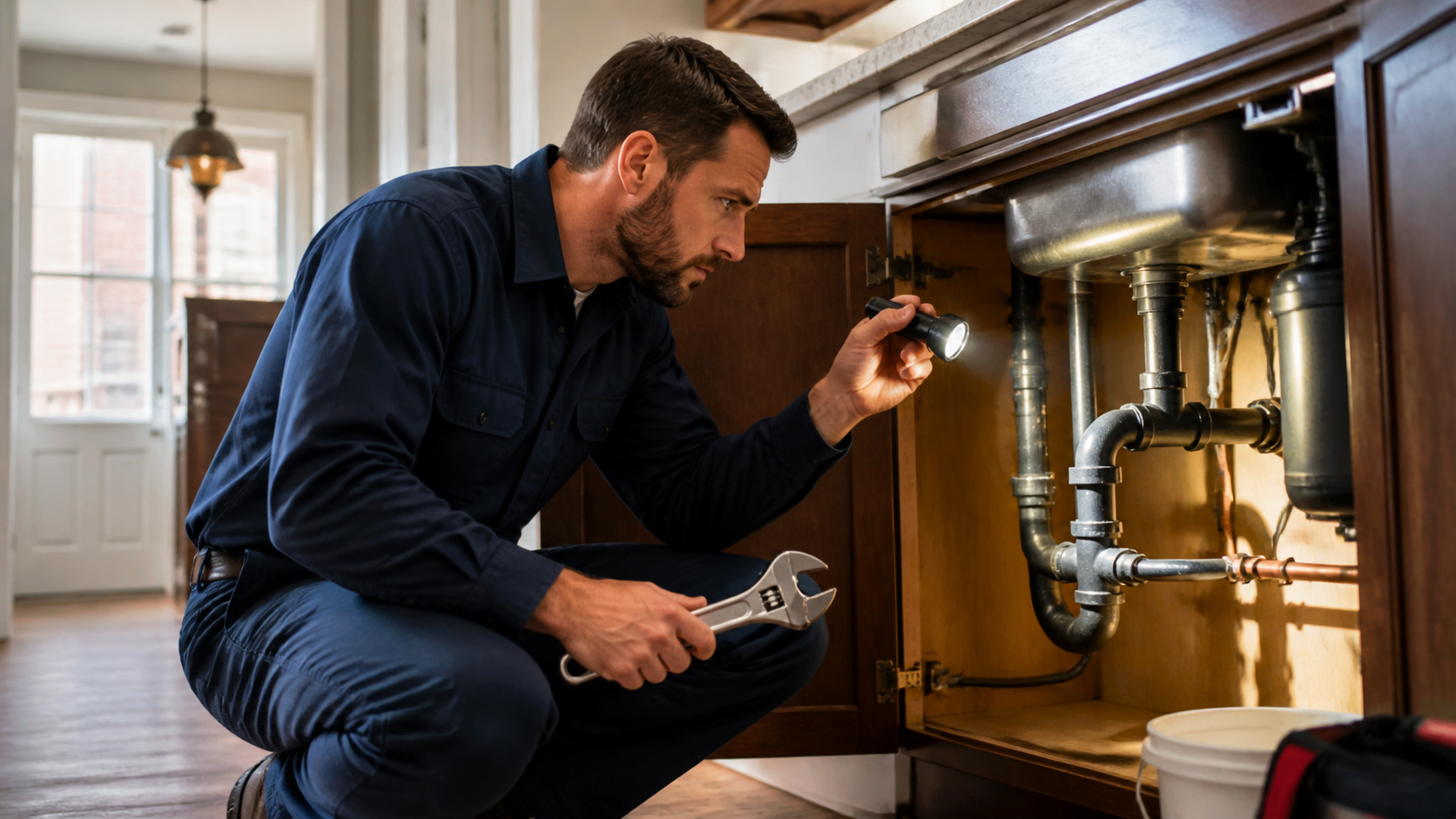
Choosing a plumber in Philadelphia is partly about technical skill and partly about whether the plumber understands older rowhomes. Original galvanized supply lines, cast-iron drains, tight chases, finished basements, and shared party walls can change the right repair plan. Before you book, gather photos, note what is leaking or backing up, and ask questions that make the scope clear.
Start with the problem and the urgency
Tell the plumber exactly what you see: a slow drain, loss of water pressure, a ceiling stain, a running toilet, a sewer odor, or a pipe that is actively leaking. Mention when it started, whether more than one fixture is affected, and whether the problem changes when neighbors use water.
If water is spreading, shut off the nearest fixture or main valve if it is safe, protect belongings, and call for urgent help. Do not open walls or cut a ceiling to “find the leak” unless you understand the electrical and structural risks.
Ask who will handle licensing and permits
Philadelphia work can involve city-specific licensing, inspection, and permit requirements. Ask the plumber which credential applies to the work, who is responsible for obtaining any permit, and whether the price includes the required inspection or permit closeout. Use the city's plumbing permit guidance and Licenses and Inspections inspections page as reference points.
For a larger replacement or improvement project, also ask whether Pennsylvania Home Improvement Contractor registration applies and request a written contract, proof of insurance, and workers' compensation coverage. Registration is not a quality guarantee, so still check references and the exact scope of work.
Look for older-home experience
Ask whether the plumber regularly works in Philadelphia rowhomes and can diagnose:
- Galvanized supply piping and low pressure
- Cast-iron drain stacks and cleanout access
- Shared walls and tight pipe chases
- Basement slabs, ejector pumps, and sump systems
- Water heaters, shutoff valves, and fixture replacements
- Sewer-line symptoms that may require a camera inspection
A good plumber will explain what is known, what is only suspected, and what test would confirm the diagnosis. Be cautious when a contractor recommends a full repipe or excavation without showing the evidence.
Compare estimates apples to apples
Written estimates should separate diagnostic time, labor, materials, permit costs, restoration, disposal, and after-hours fees. Ask whether the price covers opening and closing a wall, replacing damaged flooring, or only the plumbing portion.
Get the warranty in writing. Clarify whether it covers parts, labor, or both, and whether a drain-clearing warranty excludes recurring blockages caused by a damaged line. Ask for model numbers and material specifications when a water heater, pump, valve, or fixture is being replaced.
Verify the plan before work starts
Before the crew arrives, clear access to shutoffs and the work area. Ask how the plumber will protect finished floors, control dust, and leave the room at the end of the day. If the work affects a tenant, neighbor, or shared service line, confirm who receives notice and how water will be restored.
Compare Philadelphia plumbers
Use the Philadelphia plumber directory to compare local providers such as Goodman Plumbing, IFixdit Plumbing & Drains, Guaranteed Plumbing & Heating, and KCS Plumbing.
For related planning, read the Philadelphia rowhome maintenance calendar and the Philadelphia home inspection checklist.