
Philadelphia HVAC No-Cool Checklist: What to Check Before Calling for Service
When a Philadelphia home is not cooling properly, the cause may be a thermostat setting, airflow restriction, condensate issue, electrical problem, refrigerant concern, or equipment failure. A short safe check can improve the service call, but homeowners should not open equipment or handle refrigerant.
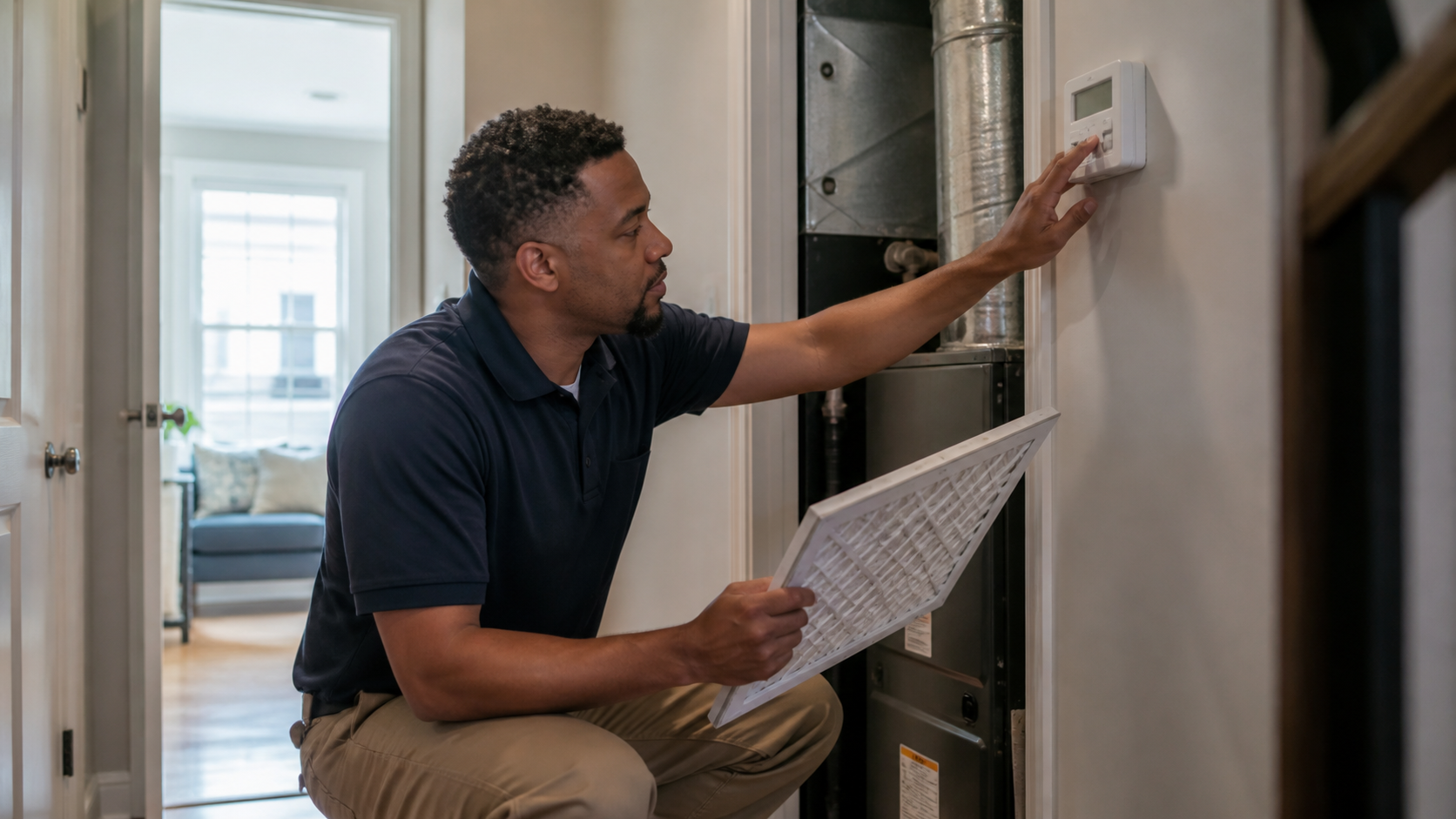
Check the thermostat mode and filter, confirm the indoor and outdoor units have power if it is safe to do so, and look for blocked supply or return vents. If there is water, burning odor, unusual noise, repeated tripping, or no improvement, schedule professional service.
Safe checks before calling
Confirm the thermostat is set to cooling and the temperature is below the room temperature. Check whether the filter is visibly blocked and whether furniture is covering returns or supply vents. If the system has a user-accessible drain pan or condensate area, look for visible water without disassembling equipment.
Do not bypass a safety switch, repeatedly reset a breaker, remove electrical covers, or add refrigerant yourself. A temporary restart can hide a developing problem.
Symptoms that help the technician
Note whether the system runs constantly, short-cycles, blows warm air, makes water, freezes, or cools one floor better than another. Record when the problem began and whether it followed a storm, power interruption, renovation, or filter change.
Philadelphia rowhomes can have long duct runs, attic equipment, basement units, zoning issues, and rooms with different sun exposure. Tell the contractor which floors and rooms are affected rather than describing the home as simply “not cooling.”
Repair, replacement, or maintenance
Ask the contractor to separate diagnosis, immediate repair, maintenance, and replacement recommendations. A clogged filter or failed capacitor is a different decision from repeated compressor, coil, control, or duct problems.
If replacement is recommended, request equipment sizing, efficiency information, installation scope, thermostat compatibility, duct or electrical changes, disposal, and warranty details. Do not compare equipment prices without comparing the installation scope.
Prepare for the appointment
Clear access to indoor equipment, outdoor equipment, thermostats, filters, and electrical disconnects. Tell the provider about pets, roof or basement access, parking, and any work happening in the home.
Ask whether the visit includes testing temperature differences, airflow, controls, drainage, and electrical components. A useful service report should explain what was checked and what remains unresolved.
Begin with simple, safe observations
Check that the thermostat is set to cooling, the temperature is below the room temperature, and the system has power. Check the accessible filter and replace it if it is visibly loaded, using the correct size and airflow direction. Look for a tripped HVAC breaker, blocked supply or return vents, unusual ice, water, or an outdoor unit that is not running.
Do not pour water on ice, open refrigerant circuits, bypass safety controls, or repeatedly reset a breaker. If the system smells burned, trips the breaker, leaks heavily, or has exposed wiring, shut it down and request professional service.
Give the technician a useful symptom history
Record when the cooling stopped, whether air is moving, whether some rooms are warmer than others, and whether the system runs continuously. Note recent filter changes, thermostat work, renovations, roof or basement moisture, and any unusual sound. A short video of a noise can be useful if the symptom is intermittent.
Ask the contractor to distinguish airflow, electrical, condensate, refrigerant, control, and equipment-age issues. A repair decision should consider the condition and expected reliability of the whole system, not just the first failed component.
A Philadelphia comparison checklist
Philadelphia summers, rowhome layouts, rooftop or attic equipment, and finished basements can make access and airflow important parts of the diagnosis. Give the contractor a room-by-room description of comfort problems.
Before you request or approve work, keep these details together:
- What was tested before the recommendation?
- Is the filter or airflow contributing to the issue?
- Is there water, electrical, or refrigerant risk?
- What is the repair warranty?
- If replacing equipment, what installation changes are included?
- Will the final system be tested in each affected zone?
Local providers and related guides
Use the Philadelphia HVAC contractor directory to compare local providers, including Fixadelphia: Mechanical Contractors, GEN3 Electric & HVAC, W.F. Smith, Inc., Downtown Mechanical LLC. Directory inclusion is not an endorsement; confirm current services, availability, licensing, insurance, and the written scope directly.
For related planning help, see How to Choose an HVAC Contractor in Philadelphia and A Philadelphia Rowhome Maintenance Calendar.
Bottom line
Start with safe observations, then let an HVAC professional diagnose the equipment. The more specific your symptom history, the more useful the first visit can be.