
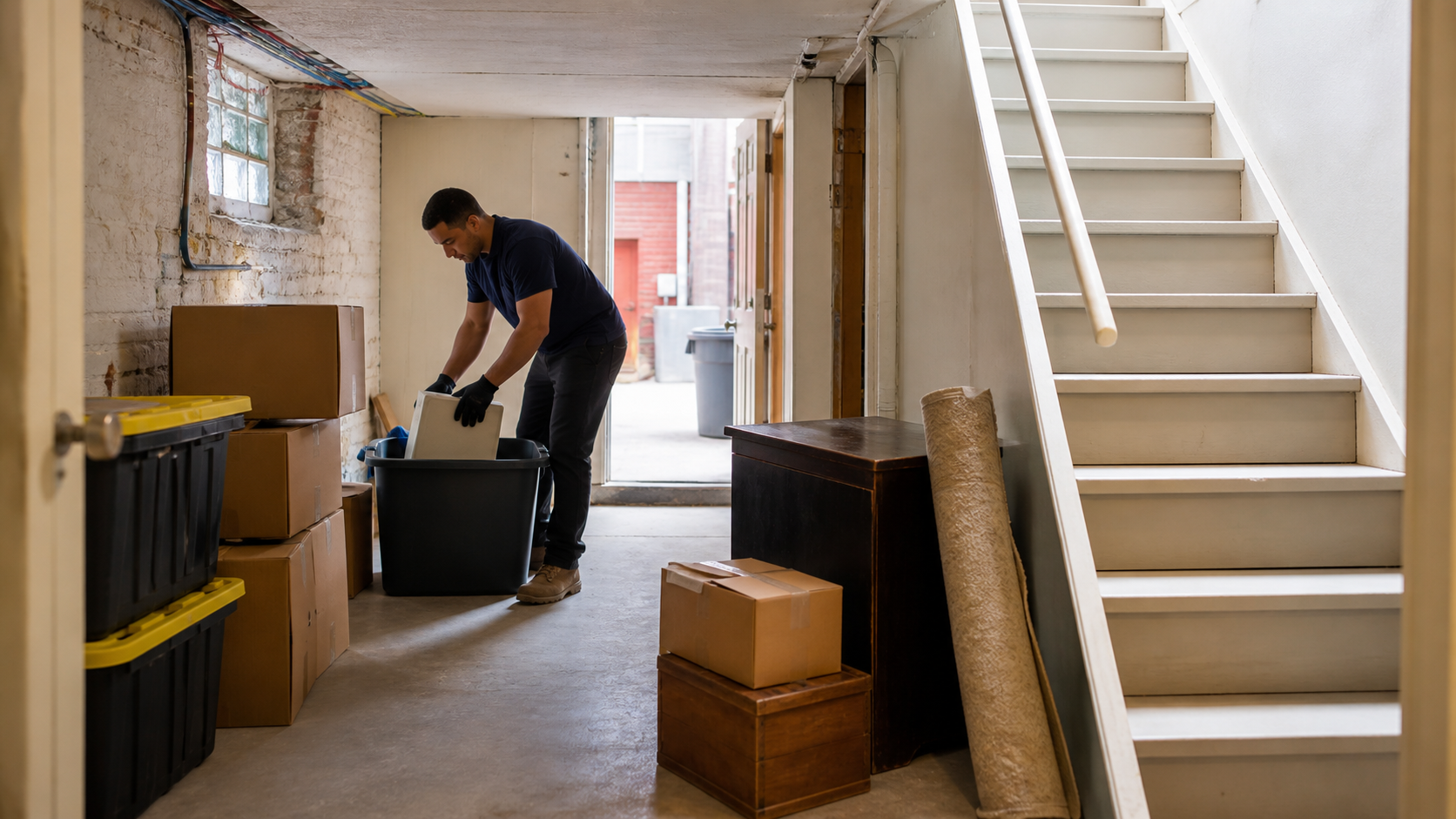
Philadelphia junk removal rarely has one simple price. A small furniture pickup, a basement cleanout, construction debris, and a full move-out load can require very different crews, vehicles, disposal methods, and labor. The most useful way to compare quotes is to describe the load clearly and ask what the price includes.
Start with the volume and type of material, then confirm access, labor, disposal, minimum charges, and the final total in writing. A photo-based estimate can be useful, but ask whether stairs, heavy items, mattresses, appliances, or extra sorting can change the quote.
What changes a junk-removal quote
Volume is usually the first variable, but it is not the only one. A few bags and a single chair may be handled differently from a truckload, a mixed basement, or a pile of renovation debris. Weight, material type, disposal rules, and whether items can be donated or recycled can also affect the scope.
Tell the company whether the material is household junk, furniture, appliances, yard debris, electronics, or construction waste. Do not assume every provider accepts paint, chemicals, tires, refrigerants, or demolition material.
Philadelphia access can add labor
Rowhomes, basements, narrow alleys, shared entrances, steep steps, limited parking, and long carries from the curb can affect the crew’s time. Mention the number of floors, elevator access, parking limitations, and whether items must be dismantled before removal.
If a large item is trapped in a basement or behind built-ins, send photos before the appointment. Clarify who handles disassembly, floor protection, and any item that cannot safely fit through the doorway.
How disposal and donations should be explained
Ask whether the quote includes loading, transportation, landfill or transfer-station charges, recycling, donation drop-off, and documentation. If you want reusable items donated, ask what condition they must be in and whether the provider chooses the destination.
For renovation debris, ask whether the crew is equipped and authorized to handle that material. Mixed loads can be priced and processed differently from ordinary household junk.
How to compare estimates
Ask at least two or three providers to quote the same list of items. A useful estimate should identify the load, labor, access assumptions, disposal, taxes or fees, cancellation terms, and what happens if the actual volume is larger than the photos suggest.
Be cautious about a low advertised starting price that excludes stairs, heavy lifting, minimum charges, or disposal. The cheapest first number is not always the lowest completed-job total.
A practical way to describe the load
Before requesting a quote, make a short inventory by room. Note the number of furniture pieces, bags, boxes, appliances, mattresses, fixtures, and loose debris. Photos should show the full pile as well as tight access points such as basement stairs, side alleys, gates, and narrow doorways. If the load is still growing, say so. A provider can price a defined pickup more reliably than an open-ended cleanout.
Separate items that need special handling. Paint, solvents, propane cylinders, batteries, televisions, refrigerators, and other regulated or difficult materials may have different disposal requirements. Ask what should be removed from the load before the crew arrives.
A quote-comparison worksheet
Keep each estimate on the same scope so you are comparing like with like. Record the estimated volume, number of workers, loading labor, access assumptions, disposal or transfer fees, taxes, donation or recycling handling, and the conditions that could change the price. Ask whether the estimate is firm, a range, or a starting point.
For a scheduled cleanout, confirm the arrival window, cancellation policy, payment method, and what happens if you need to add a few items. A written scope protects both sides and makes it easier to resolve a difference between the estimate and the completed work.
A Philadelphia comparison checklist
Philadelphia homeowners often need to coordinate junk removal with a move, estate cleanout, renovation, landlord turnover, or rowhome repair. Schedule enough time for sorting before the crew arrives, and separate anything you plan to donate, recycle, keep, or dispose of through a different program.
Before you request or approve work, keep these details together:
- Do you price by volume, weight, item, time, or a combination?
- Are stairs, long carries, dismantling, and heavy items included?
- What materials do you not accept?
- Does the quote include disposal, recycling, and donation drop-off?
- What happens if the load is larger than the photos indicate?
- Will I receive an itemized or written confirmation before loading?
Local providers and related guides
Use the Philadelphia junk removal service directory to compare local providers, including Unfunk Your Stuff, Junk King Greater Philadelphia, Delco Cleanouts, Philadelphia Hauling, Cleanouts, Furniture Removal. Directory inclusion is not an endorsement; confirm current services, availability, licensing, insurance, and the written scope directly.
For related planning help, see How to Choose a Junk Removal Company in Philadelphia and Basement Cleanout Checklist.
Bottom line
A clear item list, photos, access details, and a written scope will give you a more reliable Philadelphia junk-removal comparison than a generic online starting price.