
Philadelphia Home Insurance Claim Documentation Checklist After Property Damage
After a fire, storm, water loss, or other property event, organized documentation can help you explain what happened and what work is needed. It does not guarantee coverage or payment, but it gives you a clearer record for your insurer, contractors, and any professional you hire to assist with the claim.
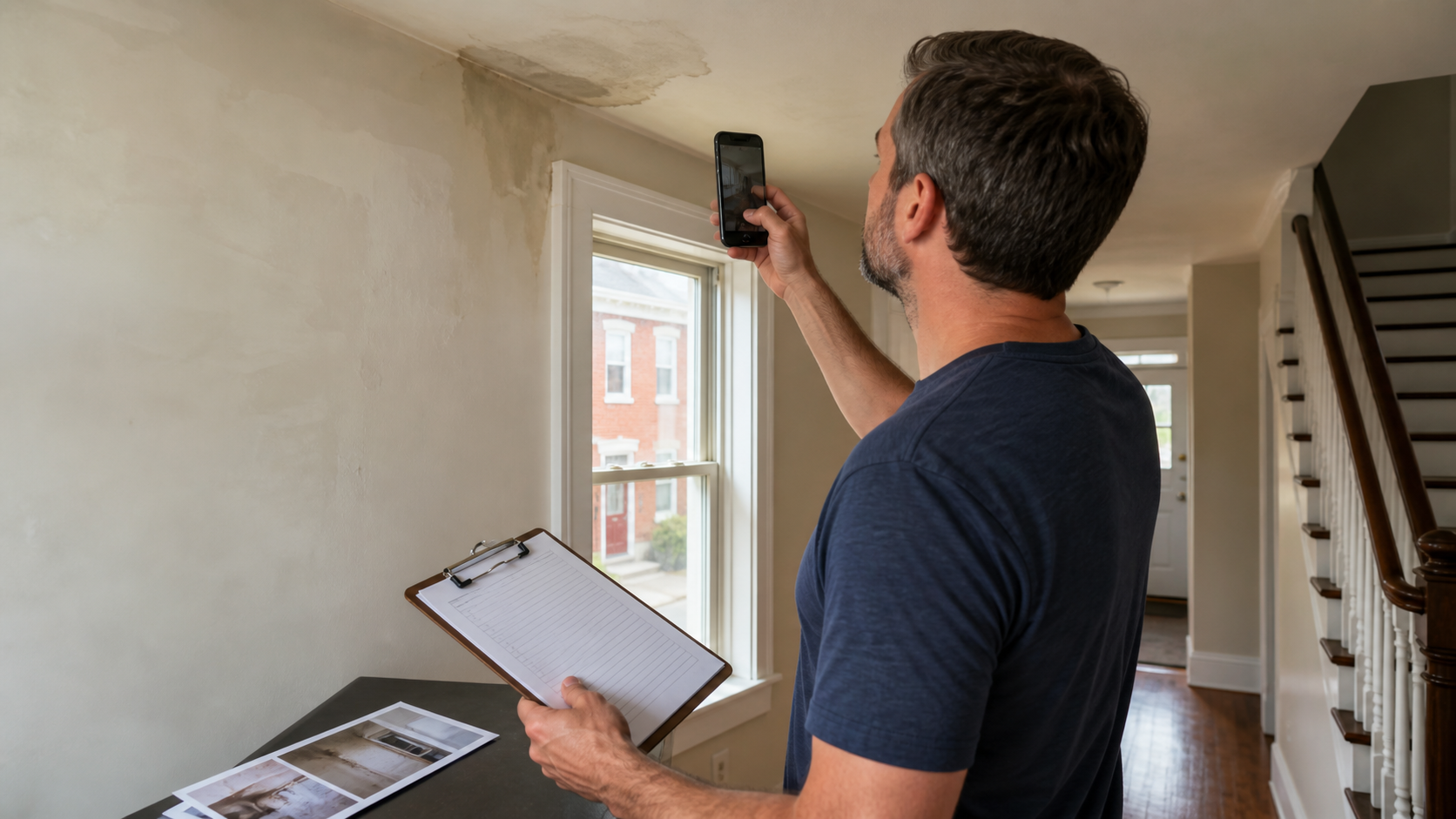
Protect people first, take photos and videos before discarding damaged materials when safe, report the loss through the appropriate channel, and keep a dated log of temporary repairs, conversations, estimates, receipts, and affected items.
Document the scene safely
Photograph the exterior, entry point, affected rooms, ceilings, walls, floors, systems, and belongings from wide and close views. Do not enter an unsafe structure, stand under damaged ceilings, or touch fire, electrical, sewage, or structural hazards.
Write down the date, weather or event, first visible symptom, actions taken, and areas that may have hidden damage. Keep original files and back them up in more than one place.
Build an item and repair record
For damaged belongings, record the item, approximate age, brand or model, condition before the event, current condition, and photos. For building work, keep estimates that identify labor, materials, drying, demolition, disposal, temporary protection, and permanent repair.
Separate emergency stabilization from upgrades or unrelated improvements. Ask contractors to identify what they observed and what they recommend, without promising that an insurer will approve the work.
Track communication and temporary work
Create a simple contact log with the date, company, person, purpose, summary, and next action. Save claim numbers, emails, notices, estimates, invoices, receipts, and photos in labeled folders.
If you need to make an urgent temporary repair, document the condition before and after and keep the receipt. Ask whether the insurer wants to inspect before non-emergency materials are removed.
Understand who can help
A contractor evaluates and repairs a trade-specific condition. A restoration company may address drying and damaged materials. A public adjuster may help a policyholder organize and present a claim, subject to the professional’s agreement and applicable rules.
Ask any professional to explain fees, scope, conflicts, documentation responsibilities, and what they can and cannot promise. Coverage decisions come from the insurer and policy terms.
Create a time-stamped record
Photograph and video every affected room, close-ups of damaged surfaces, the suspected source, and undamaged context around the area. Include wide shots so the location is clear. Do not discard damaged materials or belongings until you know what documentation is needed, unless they create a safety or sanitation hazard.
Keep a simple log with the date, weather or event, discovery time, actions taken, people contacted, and areas that remain unsafe. Store original files rather than relying only on compressed messages or screenshots.
Track temporary work separately
Emergency drying, boarding, tarping, plumbing, electrical isolation, debris removal, and temporary lodging can be different from permanent repair. Keep receipts, work orders, photos before and after, and notes about what the professional observed. Ask before making nonessential cosmetic repairs that could obscure the original condition.
A public adjuster, contractor, restoration provider, or other professional may have a different role. Ask each person what they are responsible for, how they are paid, and whether you are authorizing inspection, emergency mitigation, or a full repair.
A Philadelphia comparison checklist
Philadelphia property damage may affect rowhomes, shared walls, basements, roof transitions, older wiring, and neighboring units. Tell every provider whether the affected area is shared, occupied, or connected to another property.
Before you request or approve work, keep these details together:
- What is safe to enter or touch?
- What should be photographed before cleanup?
- Which work is emergency stabilization?
- What documents should be preserved?
- What are the professional’s fees and responsibilities?
- Who makes the coverage decision?
Local providers and related guides
Use the Philadelphia public adjuster directory to compare local providers, including Funari Public Adjusters, Premier Public Adjusters, Aclaim Adjustment Agency Inc Public Adjuster Philadelphia. Directory inclusion is not an endorsement; confirm current services, availability, licensing, insurance, and the written scope directly.
For related planning help, see Public Adjusters in Philadelphia and Philadelphia Home Inspection Checklist.
Bottom line
A claim file is easier to manage when it is chronological, visual, and separated by emergency work, damaged property, estimates, and communications. Document carefully and avoid promises that no professional can guarantee.