
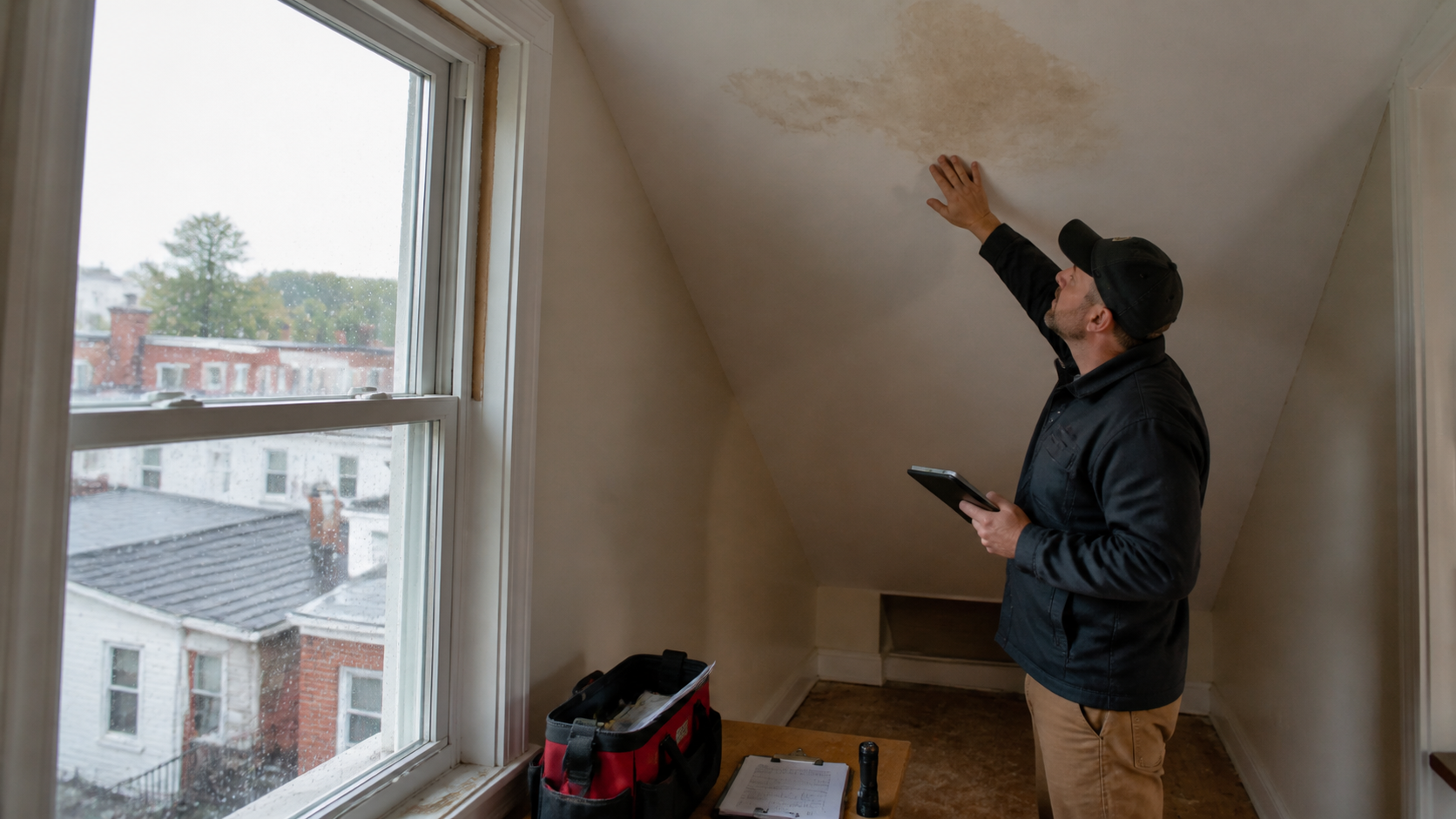
After a storm, the visible ceiling stain may be far from the roof entry point. Your first priorities are safety, temporary water control, documentation, and a clear inspection—not climbing onto a wet roof or authorizing a full replacement from a single photo.
Move people and valuables away from active leaks, place containers where safe, photograph the interior damage, and contact a qualified roofing professional. Avoid roof access during wind, rain, lightning, or when the surface is unsafe.
Document the interior first
Photograph ceilings, walls, insulation, flooring, cabinets, and belongings from several angles. Note when the leak started, whether it changes with rain, and whether water is near electrical fixtures or finished surfaces.
Use a simple log with the date, weather, location, visible damage, temporary steps, and conversations with contractors or insurers. Keep receipts for tarps, emergency drying, or other reasonable temporary measures.
Do not assume the first visible spot is the source
Water can travel along decking, rafters, flashing, chimneys, walls, or roof penetrations before appearing indoors. A roofing inspection should examine the likely entry area and nearby transitions.
Do not make a permanent patch that hides the cause before it is documented. If an emergency tarp or temporary repair is necessary, ask the provider to describe what was covered and what still needs inspection.
Separate emergency work from replacement
Ask whether the immediate goal is to stop active water, protect the structure, or evaluate long-term roof condition. A storm-related leak may be a localized flashing or shingle issue, but broader deterioration can require a larger scope.
Request photos, the observed cause, recommended repair, materials, labor, warranty, and any exclusions. If replacement is recommended, compare the inspection evidence with the proposed scope instead of relying on a generic storm-damage label.
Coordinate roofing and insurance documentation
If you plan to make an insurance claim, preserve photos and receipts and avoid discarding damaged materials before instructions are clear. Ask the contractor for an itemized estimate and separate emergency stabilization from permanent repair.
A roofer documents building work; an insurance professional or public adjuster may help explain claim paperwork. Do not let a contractor promise coverage or guarantee an insurance outcome.
Document without climbing onto the roof
Photograph water stains, active drips, damaged ceiling materials, wet insulation if safely visible, and any belongings that were affected. Use a ruler or familiar object for scale and write down the room, date, and time. If water is near lights or outlets, keep clear and have the electrical risk assessed.
From the ground, photograph roof edges, gutters, downspouts, flashing areas, and visible storm debris. Do not climb onto a wet or damaged roof to look for the source. A professional can inspect the exterior and determine whether temporary protection is needed.
Separate temporary protection from permanent work
Ask what can be done immediately to stop additional water and what will require a later repair. Temporary covering, drying, and removal of unsafe materials should be documented separately from replacement of shingles, membranes, flashing, masonry, decking, or interior finishes.
Keep invoices, photos, inspection notes, and communication in one folder. Avoid authorizing broad replacement work before the source and scope are explained, but do not delay reasonable emergency measures that prevent the damage from worsening.
A Philadelphia comparison checklist
Philadelphia roofs may include rowhome party-wall transitions, flat-roof sections, rear additions, masonry penetrations, and older flashing. Tell the inspector about the roof type, recent repairs, and every room where water appeared.
Before you request or approve work, keep these details together:
- Is the property safe to occupy?
- What temporary protection is needed?
- Where does the contractor believe water entered?
- What photos and measurements will be provided?
- Is the recommendation a repair or replacement, and why?
- What is included in the written warranty?
Local providers and related guides
Use the Philadelphia roofing contractor directory to compare local providers, including DISCOUNTED ROOFING LLC, Big Joe's Roofing, Loonstyn Roofing, Top Tier Roofing. Directory inclusion is not an endorsement; confirm current services, availability, licensing, insurance, and the written scope directly.
For related planning help, see How to Choose a Roofing Contractor in Philadelphia and Philadelphia Home Inspection Checklist.
Bottom line
Storm response is easier when you document first and separate temporary protection from permanent repair. Keep the record organized for the roofer, insurer, and any restoration provider.