
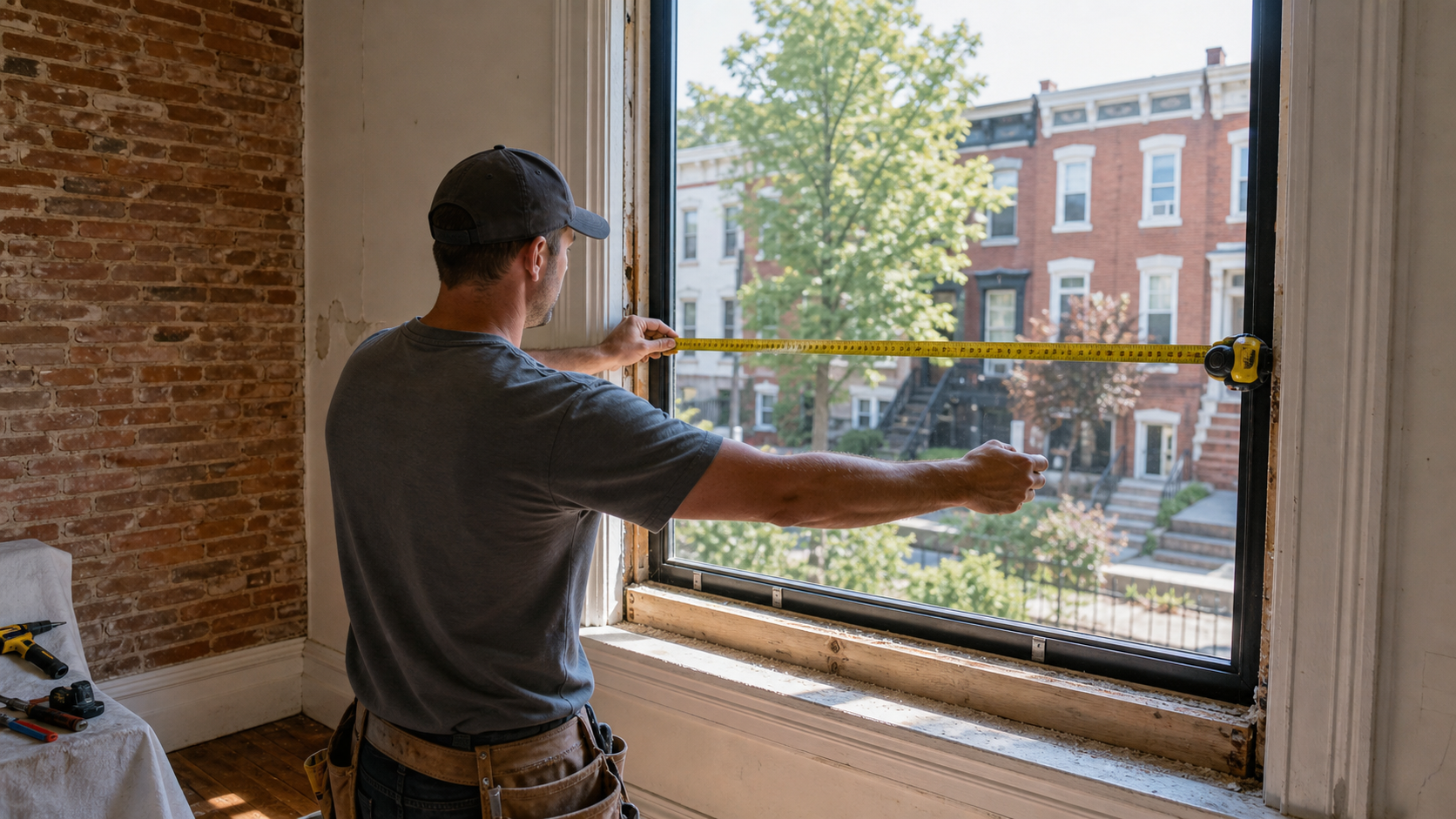
Replacing windows in a Philadelphia rowhome involves more than choosing glass and a frame. Opening size, trim, masonry, access, historic details, ventilation, water management, and interior repairs can all affect the final result.
Start by documenting the existing windows and measuring the openings professionally. Ask whether the project is an insert, full-frame replacement, or repair, and get the installation, flashing, trim, disposal, and finish work described in writing.
Decide whether repair is still reasonable
Drafts, sticking sashes, failed seals, damaged glazing, and deteriorated trim do not always require a full replacement. Ask whether weatherstripping, sash repair, glazing, or targeted exterior work could solve the problem.
Replacement deserves stronger consideration when the frame is failing, water is entering, the opening is badly out of square, or the window cannot meet the home’s practical needs. A written diagnosis helps prevent a product-first conversation.
Understand the replacement type
An insert or pocket replacement may preserve more interior and exterior trim but can reduce the visible opening. A full-frame replacement may address the opening more completely but can involve siding, masonry, plaster, paint, or casing work.
Ask how the installer handles shims, flashing, sill pans, exterior sealant, interior air sealing, trim, and water management. The product quote is not the same as the complete installation scope.
Philadelphia rowhome constraints
Tight lots, shared walls, rear additions, tall openings, narrow stairs, and street access can affect labor and staging. Historic or architecturally distinctive façades may require additional review or a different product approach.
Tell the contractor about security, pets, occupancy, furniture, radiator placement, and whether the work is being coordinated with painting, masonry, insulation, or remodeling.
Compare the written proposals
Ask each proposal to identify window type, glass, opening sizes, installation method, trim, flashing, screens, disposal, cleanup, warranty, and exclusions. Confirm whether the quoted work covers every window or only the visible replacement unit.
Ask who handles measuring, ordering, damage inspection, and manufacturer warranty registration. Do not schedule demolition until the ordered units and the installation scope are confirmed.
Begin with the reason for the project
Drafts, sticking sashes, failed seals, water intrusion, noise, rot, and difficult operation can point to different solutions. Ask whether repair, sash replacement, reglazing, weatherstripping, or full replacement is appropriate. If the existing opening has historic, trim, or masonry details, photograph it before any work begins.
Measure the opening only as a planning reference; final sizing should come from the installer responsible for the order. Confirm whether the proposal covers interior trim, exterior capping or caulk, flashing, disposal, painting, plaster repair, and cleanup.
Make the proposals comparable
Ask every provider to quote the same opening count, window type, glass package, color, grid pattern, screens, trim assumptions, and finish work. The proposal should identify who handles permits or approvals if applicable, how the opening is protected overnight, and what happens if concealed damage is found.
For an occupied rowhome, ask how many openings can be completed per day and how the crew will protect floors, furniture, and nearby rooms. Keep a record of product specifications and warranty terms so the installed window can be matched to the order.
A Philadelphia comparison checklist
Philadelphia rowhomes often have windows surrounded by plaster, wood trim, brick, or other finishes that can be damaged during removal. Protecting the interior and coordinating finish work should be part of the planning conversation.
Before you request or approve work, keep these details together:
- Is this a repair, insert, or full-frame replacement?
- Who measures the opening?
- How are water and air sealing handled?
- Does the scope include interior and exterior trim?
- What access and protection are required?
- What is covered by the product and installation warranties?
Local providers and related guides
Use the Philadelphia window and door directory to compare local providers, including J&M Window Door Inc., Perma Seal, Fahey Roofing Siding Doors Windows Inc. Directory inclusion is not an endorsement; confirm current services, availability, licensing, insurance, and the written scope directly.
For related planning help, see Philadelphia Rowhome Remodeling Estimates and Philadelphia Home Inspection Checklist.
Bottom line
A good window replacement decision starts with the opening and installation details, not the brochure. Compare complete scopes so the finished project is weather-tight, usable, and appropriate for the rowhome.