
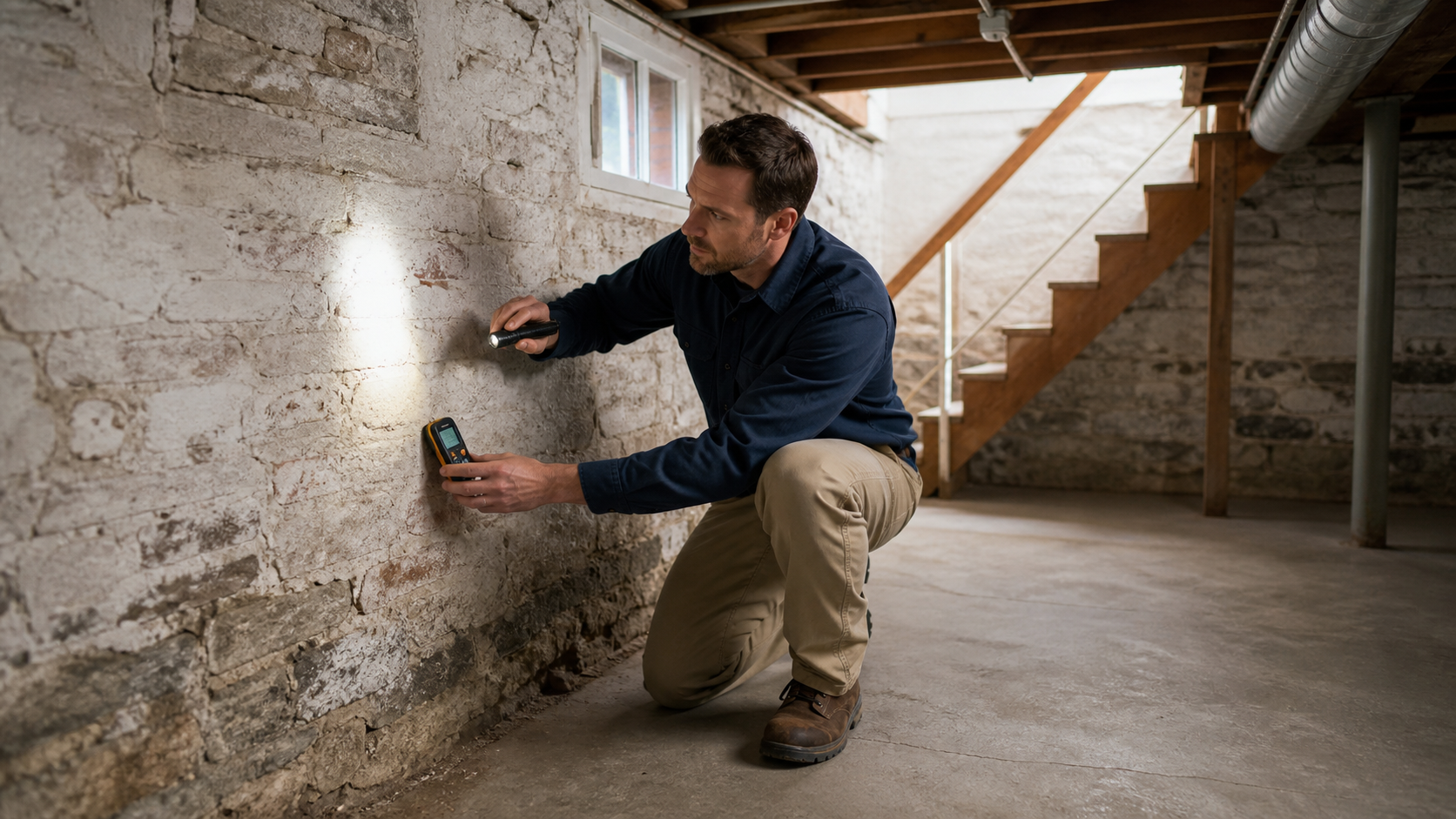
Philadelphia Basement Moisture: When to Call Waterproofing or Restoration Pros
A damp Philadelphia basement can result from seepage, plumbing leaks, grading, foundation movement, condensation, or a failed drainage system. The right next step depends on the source and whether the space has active water, structural movement, persistent humidity, or damaged materials.
Move belongings away from wet areas, document the location and timing of moisture, and avoid entering standing water near electrical equipment. Call a qualified professional when water is recurring, the source is unclear, walls are cracking, or materials remain damp after cleanup.
Different moisture patterns point to different questions
Water appearing after rain may suggest exterior drainage, wall seepage, or a roof or foundation transition. Moisture that appears during humid weather may be condensation. A sudden puddle near a water heater, laundry area, or plumbing line may need a plumber instead.
Record whether the moisture is on the floor, wall, ceiling, window well, or around a penetration. Photos taken before drying can help the professional identify the pattern.
Protect belongings and finishes
Use safe temporary steps to move boxes, furniture, and stored materials away from walls and floors. Do not run electrical equipment through standing water or disturb materials that may be contaminated.
Ask whether drying, cleaning, mold assessment, plumbing repair, waterproofing, foundation repair, or a combination is needed. A paint coat or sealant may hide symptoms without solving the source.
What a waterproofing evaluation should explain
Ask the contractor to identify the suspected entry path, interior or exterior options, drainage assumptions, pump or discharge considerations, excavation requirements, and warranty limits. Request photos and a written scope.
If cracks, settlement, bowing walls, or doors that no longer close are present, ask whether a structural evaluation is appropriate. Waterproofing and structural repair are related but not identical scopes.
Philadelphia basement access matters
Rowhome basements may have narrow stairs, low ceilings, shared walls, old stone or masonry foundations, and finished storage areas. Tell the provider about access, neighboring structures, sump equipment, utilities, and any planned remodeling.
Before work begins, clarify floor protection, debris removal, noise, excavation, wall restoration, and what happens if the source is different from the initial assumption.
Read the moisture pattern
A damp smell, wall seepage, floor water, condensation, staining after rain, or a plumbing leak can have different causes. Note when the problem appears, whether it follows heavy rain, where it begins, and whether gutters, downspouts, grading, or nearby construction changed recently. A dehumidifier can help protect the space, but it does not identify or fix the source.
Move boxes, furniture, and stored materials away from wet walls and floors. Keep electrical equipment elevated and avoid entering standing water when electrical safety is uncertain. Photograph the pattern before cleaning or painting over it.
Compare solutions by cause and access
A useful evaluation should discuss drainage, foundation walls, floor joints, plumbing, condensation, sump equipment, exterior conditions, and the way the basement is used. Ask whether the proposal is intended to manage water, humidity, mold-related cleanup, structural movement, or several conditions at once.
Request a written scope describing preparation, access, excavation or interior work, pumps and backup systems, cleanup, warranties, and what is not included. If finishes will be installed afterward, confirm the space is dry enough and the source has been addressed before closing walls.
A Philadelphia comparison checklist
Philadelphia’s older housing stock and compact lots can make exterior drainage and foundation work more involved. A careful inspection should account for the building, adjacent property, downspouts, grading, plumbing, and basement use.
Before you request or approve work, keep these details together:
- Is the moisture active or residual?
- Could plumbing, condensation, or exterior drainage be involved?
- Is there a safety concern with standing water?
- Does the proposal include drying or restoration?
- Are structural signs present?
- What warranty exclusions should I understand?
Local providers and related guides
Use the Philadelphia waterproofing service directory to compare local providers, including Dr. Leaks - Leak Detection & Mold Remediation Philadelphia, Basement Gurus, Rightway Waterproofing, Philadelphia Foundation Repair & Waterproofing. Directory inclusion is not an endorsement; confirm current services, availability, licensing, insurance, and the written scope directly.
For related planning help, see Basement Cleanout Checklist and Philadelphia Home Inspection Checklist and A Philadelphia Rowhome Maintenance Calendar.
Bottom line
Basement moisture is a diagnosis problem before it is a product problem. Document the pattern, protect people and belongings, and compare scopes that address the suspected source.