
Philadelphia Plumbing Emergency Checklist: What to Do Before the Plumber Arrives
A leaking pipe, overflowing fixture, loss of water, or sewage backup can become a larger property problem quickly. The first goal is to control the source safely, document what happened, and give the plumber enough information to respond with the right equipment.
If it is safe, stop the water at the fixture or main shutoff, turn off nearby electrical equipment, move belongings away from the affected area, and call a qualified plumber. Do not open contaminated water or attempt a repair you cannot safely complete.
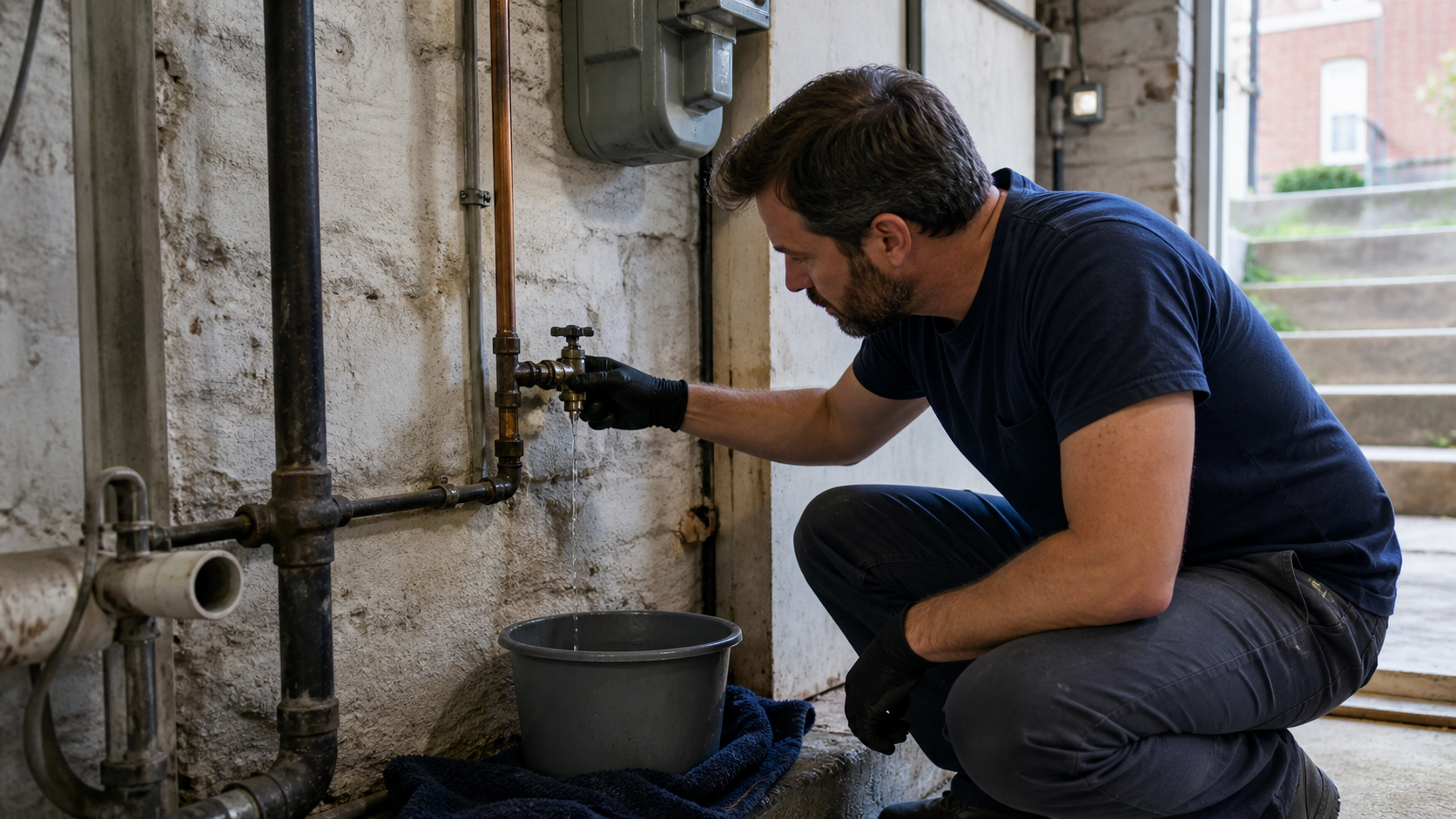
Control the water if you can do so safely
Look for the fixture shutoff or the home’s main water shutoff. Turn it slowly and avoid forcing a valve that is corroded or stuck. If the leak is near an electrical outlet, appliance, panel, or wiring, keep away and use professional help.
For an overflowing toilet, close the fixture valve if it is accessible and stop flushing. For a burst pipe or ceiling leak, document the location and protect furniture without placing yourself under an unsafe ceiling.
Know when the situation is more than a plumbing repair
Sewage, contaminated water, gas odor, electrical hazards, active ceiling damage, and flooding near a finished wall may require additional emergency services. Keep children and pets out of the affected area.
If the source is unclear, take photos and short videos from a safe location. A plumber can use that information to bring appropriate parts and determine whether restoration, electrical, or building assistance may also be needed.
Prepare useful information for the call
Tell the plumber the fixture, location, water type, approximate start time, whether the water can be shut off, and whether the problem is constant or intermittent. Mention the home’s access route, basement, shared hallway, parking, and any previous repair.
Ask whether the visit is diagnostic, emergency response, or a repair appointment. Confirm the service-call terms and whether the plumber will provide a written scope before additional work begins.
Document damage and follow-up work
Photograph flooring, cabinets, ceilings, walls, belongings, and visible source points before cleanup where possible. Keep receipts for emergency supplies and any temporary work.
After the repair, ask what caused the failure, what was replaced, whether the area was tested, and whether additional drying or monitoring is recommended. A repair that stops the leak does not automatically remove moisture from the surrounding materials.
Protect people and property first
If water is near electrical equipment, a furnace, outlets, or the service panel, keep clear and call for emergency help. Do not enter standing water when you cannot confirm the electrical area is safe. If a drain or sewer backup is involved, limit contact, keep children and pets away, and ask the responding professional about cleanup and sanitation.
Move furniture and valuables only if you can do so safely. Use towels or containers to limit spread, but do not hide the source of an active leak behind a wall or ceiling. A quick photo of the leak, shutoff, and affected areas can help the plumber prepare.
Know what information speeds up the call
Tell the plumber whether the water is clean supply water, a drain backup, a heating-system leak, or an unknown source. Describe when it started, whether it changes when a fixture runs, which floors are affected, and whether the leak stops when a local or main shutoff is closed.
Ask what temporary steps are safe, what arrival window is available, and whether emergency labor, materials, cleanup, or after-hours charges are separate. If a ceiling is bulging or a pipe is actively spraying, say that clearly so the urgency is understood.
A Philadelphia comparison checklist
Philadelphia rowhomes may route plumbing through stacked kitchens, bathrooms, basements, and shared walls. A leak can affect more than one floor or unit, so tell the plumber if water is appearing in a neighboring room, ceiling, party wall, or common area.
Before you request or approve work, keep these details together:
- Where is the safest shutoff?
- Is the water safe to touch or clean?
- Is there an electrical or ceiling hazard?
- What should I photograph before cleanup?
- Is the visit diagnostic or a confirmed repair?
- Will drying, restoration, or another trade be needed afterward?
Local providers and related guides
Use the Philadelphia plumber directory to compare local providers, including Goodman Plumbing, IFixdit Plumbing & Drains, Guaranteed Plumbing & Heating, City Plumbing. Directory inclusion is not an endorsement; confirm current services, availability, licensing, insurance, and the written scope directly.
For related planning help, see How to Choose a Plumber in Philadelphia and Philadelphia Home Inspection Checklist.
Bottom line
A calm first response can limit damage. Control the source only when safe, preserve documentation, and give the plumber a clear description of the event.